What to Pack for a Red River Gorge Cabin Trip

What to Pack for a Red River Gorge Cabin Trip

Red River Gorge rewards the prepared traveler. Pack right and you are free to chase a waterfall, linger in a hot tub until midnight, and wake up early enough to catch the fog sitting in the canyon. Pack wrong and you spend your first morning driving back to Lexington for hiking shoes. This list exists so that does not happen to you.

Whether you are staying in a treetop cabin perched above the forest canopy or setting up a base camp to hit as many trails as possible, the Gorge has a specific set of needs. We have distilled them here, organized so you can pack in order and check off as you go. Save this page before you leave the cell service zone.

What to Pack for Red River Gorge: The Complete Cabin Packing List

Footwear (This One Matters More Than Anything Else)

The trails in the Daniel Boone National Forest are sandstone, root-covered, creek-crossed, and genuinely technical in places. A trail runner or low hiking boot with real grip is not optional. Flip flops belong on the deck, not on the path to Gray’s Arch.

  • Hiking boots or grippy trail runners (broken in, not new out of the box)
  • Water shoes or old sneakers for creek crossings and river access
  • Sandals or slide-ons for around the cabin
  • Wool or moisture-wicking socks, at least two pairs per hiking day

If you plan to walk behind a waterfall like Copperas Creek Falls or scramble through any creek-side route, assume your feet are getting wet. Pack accordingly.

Clothing: Layer Like You Mean It

The Gorge sits in the hills of eastern Kentucky, and the temperature swings between trailhead and ridgeline, between midday sun and after-dark hot tub, can be significant. Even in summer, nights drop fast once the sun leaves the canopy. In late fall and winter, a 20-degree swing between afternoon and midnight is not unusual.

  • Moisture-wicking base layers (one per hiking day)
  • A mid-layer fleece or lightweight down jacket
  • A wind and rain shell (the Gorge does not wait for a weather window to change its mind)
  • A warm hat and gloves if you are visiting October through March
  • Comfortable, non-cotton layers for evenings at the fire pit
  • At least one outfit you are happy to get muddy
  • Swimsuit (the hot tub is private, it is heated, and you will regret not having one)

Cotton is the enemy on trail. It holds moisture and makes cold nights miserable. Leave the cotton hoodie for the fire pit and pack synthetic or wool for anything involving a hike.

Day Pack and Trail Essentials

Even short hikes in the Gorge earn respect. A trail labeled moderate can include real elevation, exposed ridgelines, and sandstone scrambles that slow you down. The Ten Essentials apply here just as they would in any serious backcountry.

  • A daypack in the 15 to 25 liter range (enough for water, snacks, and layers)
  • Water: at least 2 liters per person for a full hiking day, more in summer
  • Water filter or purification tablets (if you plan longer routes near streams)
  • High-calorie snacks (trail mix, bars, real food)
  • Paper map or downloaded offline map of the trail system (AllTrails offline mode is your friend; cell signal is not reliable)
  • Headlamp and spare batteries
  • Basic first aid kit with blister pads, ibuprofen, and an ACE bandage
  • Trekking poles (optional but appreciated on routes like Auxier Ridge or Indian Staircase)
  • Sunscreen and insect repellent, spring through fall

A note on Indian Staircase: it involves real, exposed sandstone scrambling that can be genuinely dangerous for unprepared hikers. If it is on your list, pack accordingly and do not go alone unless you have scrambling experience. For families or first-timers, Rock Bridge Loop or Whittleton Arch are excellent and reward with far less consequence.

Hot Tub and Night Sky Kit

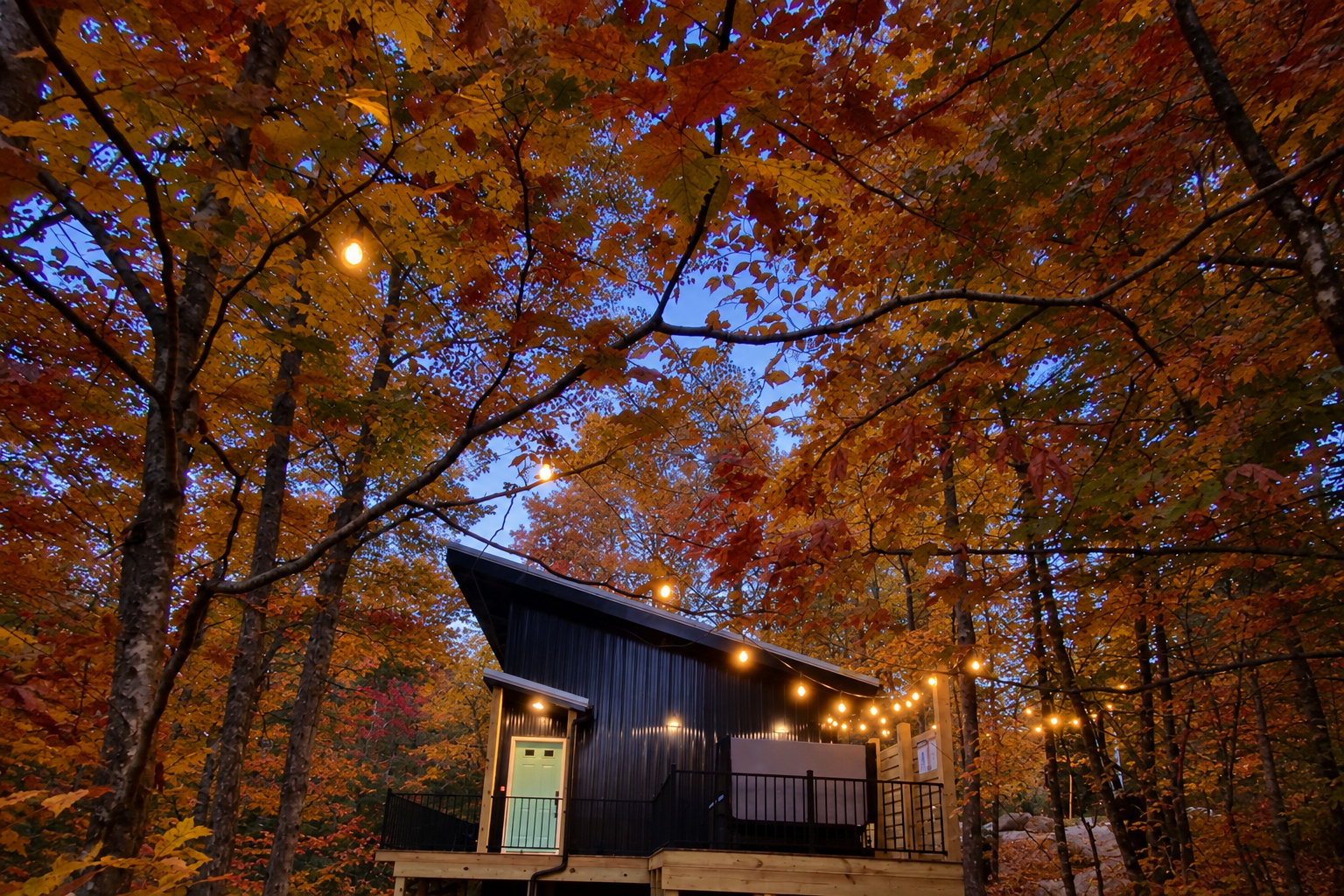
One of the quieter pleasures of staying in a treetop cabin at the Gorge is the private hot tub with nothing overhead but tree canopy and, on clear nights, an embarrassing number of stars. Optimize for it.

  • Swimsuit (mentioned in clothing, worth mentioning twice)
  • A lightweight robe or oversized towel for the walk from deck to door on cold nights
  • A good thermos or insulated mug (coffee at sunrise on the deck is not negotiable)
  • A red-light headlamp if you are serious about stargazing (preserves night vision)
  • A star map app downloaded offline
  • A Bluetooth speaker, low-volume, for the fire pit playlist

Tech and Connectivity

Cell service in the Gorge is inconsistent at best. That is partly the point. But it means preparation matters more than usual.

  • Portable power bank, fully charged before you leave home
  • Camera or phone charged the night before every hike (the light in the Gorge earns it)
  • Offline maps downloaded before you lose signal (AllTrails, Google Maps, Gaia GPS)
  • Kindle or a real book for the cabin evenings
  • Your hiking playlist saved for offline play

If you need to work remotely for part of the trip, check with your cabin host about the wifi situation before you book. Working from a deck overlooking the forest canopy is a genuinely productive experience, but only if the signal cooperates.

Food, Drinks, and Cabin Supplies

The Gorge has a solid lineup of restaurants. Thatcher Barbecue Company in Slade, Sky Bridge Station with its Kentucky microbrews, Red River Rockhouse, La Cabana for a solid taco situation, and 145 Roadhouse in Campton for a weekend-worthy dinner. You will not go hungry. But the drive from the trailhead to anywhere with groceries takes time, and after a full day on the trail, the last thing you want is a 20-minute drive before you can eat.

  • Enough breakfast supplies for every morning you plan to eat at the cabin (eggs, oats, coffee, real creamer)
  • Packed lunches for trail days so you are not driving back midday
  • Snacks for the cabin: cheese, crackers, fruit, things that do not require cooking
  • Your preferred coffee setup (a French press and good beans elevate a foggy morning significantly)
  • A bottle of wine or a six-pack of something local for the fire pit
  • A cooler if you are packing for multiple days of trail lunches
  • Reusable water bottles, one per person plus one for the car
  • A small cutting board and your favorite knife (cabin kitchens have the basics, but your gear is always sharper)

If your cabin host is worth their salt, you will find the place stocked with a few welcome surprises when you arrive. The best hosts know what a tired hiker actually needs. Skip and Liz at Vacation Alchemist have a habit of thinking about that before you even ask, which is one of the reasons booking direct through vacationalchemist.com means you get a different experience than a faceless platform booking. More on that at the end.

Climbing-Specific Gear (If You Are Here for the Rock)

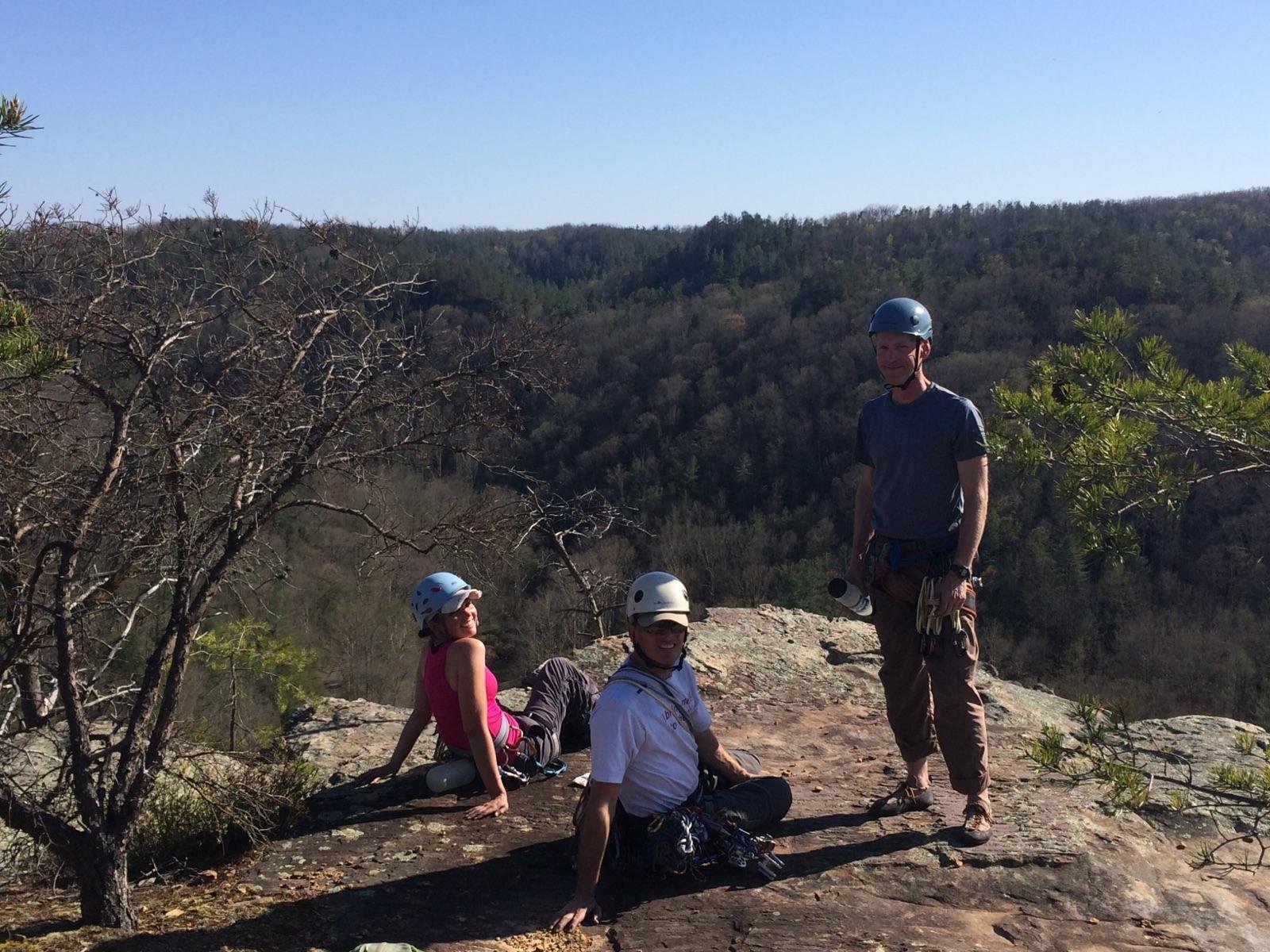
Red River Gorge is one of the premier sport climbing destinations in the country. If climbing is on the agenda, you likely already know what you need. A few Gorge-specific notes:

  • Muir Valley is free to climb but charges a $15 per vehicle daily parking fee; the fee funds the nonprofit Friends of Muir Valley, which maintains the preserve. A membership or volunteer day can earn you an annual pass.
  • The rock is sandstone, which can be polished on popular routes. Plan for grades that feel harder than they are on limestone.
  • A guidebook to the Gorge is worth having in paper form. Cell signal is unreliable at the crags.
  • Tick brushes, your own anchors, and a willingness to leave nothing behind. The Gorge climbing community keeps this place clean and open. Do your part.

What You Can Leave at Home

A few things people routinely overpack for a Gorge cabin trip:

  • Heavy camp cooking gear (the cabin has a full kitchen)
  • A tent (you have a treehouse)
  • Your entire skincare routine (bring the basics; the forest will simplify you)
  • Work stress (the signal drops before you hit the trailhead)

When to Go and What Changes by Season

The Gorge shifts dramatically with the seasons, and your packing list should shift with it.

Spring brings wildflowers, full creeks, and muddy trails that require real grip. Fall brings the foliage, cooler air, and the best light the Gorge offers all year. Summer is hot on the exposed ridgelines and crowded on weekends, but the swimming holes and evening hot tub are unbeatable. Winter is the secret season: quiet trails, potential snow views from the deck, and a hot tub that hits different when the air is 28 degrees.

Whatever the season, the layering principle holds. Mornings in the Gorge are cooler than the forecast suggests. Nights are always cooler than you expect. Pack one more warm layer than you think you need.

The Case for Booking Your Cabin Direct

When you reserve a cabin through Airbnb or VRBO, the platform adds its own service fees on top of the nightly rate and puts a layer of automation between you and the people who actually know the place. When you book through vacationalchemist.com, you skip those fees and book with the hosts directly. That means the people who know which trail is muddy this week, which barbecue spot opened a new patio, and what to stock the cabin with for your specific trip are the same people you are talking to before you even arrive. That is not a small thing. Start your Vacation Alchemist booking here and see what the difference feels like.

Frequently Asked Questions

Is there cell service at Red River Gorge cabins?

Cell service in the Red River Gorge area is limited and inconsistent, especially on the trails and in the canyon. Most cabins have wifi, but you should download offline maps and any media before you arrive. Think of it as a feature, not a bug.

Do I need to bring towels to a Red River Gorge cabin?

Most vacation rental cabins in the Gorge provide standard bath towels, but it is worth confirming with your specific host. If you plan to use the hot tub regularly, bringing an extra towel or a lightweight robe for the walk back inside on cold nights is a smart move regardless.

What shoes should I wear hiking in Red River Gorge?

Trail runners or low to mid hiking boots with solid grip and a grippy outsole are the right call for most Gorge trails. The terrain is sandstone, rooty, and often wet near creek crossings. Avoid new, unbroken shoes and avoid anything without real traction. For scramble routes like Indian Staircase, a stiffer sole and ankle support matter more.

Should I bring food or eat out in Red River Gorge?

Both. The Gorge has a solid restaurant scene including Thatcher Barbecue Company, Sky Bridge Station, La Cabana, Red River Rockhouse, and 145 Roadhouse in Campton, among others. That said, packing your own trail lunches and cabin breakfasts saves time and keeps you flexible. Many spots have seasonal hours, so check before you plan your whole itinerary around a dinner reservation.

Is Red River Gorge good in November and December?

Yes. Late fall and early winter are genuinely good times to visit the Gorge. The crowds thin, the trails are quiet, and a private hot tub with a fire pit in cold air is one of the more civilized ways to spend a winter evening. Bring real layers, a good hat, and low expectations for warm afternoon light. The payoff is a different kind of beauty than summer, and it is entirely worth it.
Best Photography Spots in Red River Gorge

Best Photography Spots in Red River Gorge

Red River Gorge is one of the most photogenic places in the eastern United States. The Daniel Boone National Forest packs towering sandstone arches, fog-layered canyon overlooks, hidden waterfalls, and ancient rock shelters into a relatively compact stretch of eastern Kentucky. Whether you shoot on a mirrorless camera or a phone, the Gorge rewards patient photographers and spontaneous ones equally. This guide covers the best photography spots in Red River Gorge, organized by what you want in the frame, with honest notes on light, timing, and trail difficulty.

Why Red River Gorge Photographs So Well

The Gorge sits at the confluence of geology and weather in a way that creates natural drama. Sandstone cliffs catch warm light at golden hour while the canyon floor stays in shadow, creating layered depth. Fog from the Red River rolls up into the forest most mornings from late spring through fall, turning a simple overlook shot into something cinematic. The region has the highest concentration of natural arches east of the Rocky Mountains, which means stone frames are everywhere. You are rarely more than a short hike from something worth pointing a lens at.

The Best Spots for Arch Photography

Arches are the signature subject of the Gorge, and no two look alike. Here is how they rank for photographers.

Natural Bridge: The Iconic Starting Point

Natural Bridge is 78 feet wide and roughly 65 feet high, and it is the most photographed arch in Kentucky for good reason. The Original Trail is a short, steady climb that puts you at the arch quickly. For the best light, arrive mid-morning when the sun clears the ridgeline and falls directly on the sandstone. The arch photographs best from below, where you can frame it against the sky. A wide-angle lens (or the ultra-wide mode on a modern phone) handles the full span. If you want the arch without the crowd, weekday mornings in November are your best window. The seasonal Sky Lift, which runs approximately April through November, offers an entirely different angle from above if you catch it in time.

Gray’s Arch: Dramatic Scale, Worth the Walk

Gray’s Arch is deeper in the forest and arguably more dramatic than Natural Bridge because of how completely it is framed by trees. The hike is roughly 3.4 miles out and back, with a flat forest walk that turns steep near the arch. Plan for the arch to be in dappled shade for most of the day, which is actually ideal for photography. Direct midday sun can blow out the highlights on sandstone. Overcast days are genuinely great for arch shots here because the light is even and color-rich. The rock face behind the arch picks up warm tones even in flat light.

Whittleton Arch: The Quiet Reward

Whittleton Arch is about 2.6 miles round trip and walks alongside a creek for most of its length. It is significantly quieter than Natural Bridge or Gray’s Arch, which means you can take your time, set up a tripod, and wait for the light you actually want. The arch is smaller but no less beautiful. The creek beside the trail photographs well on its own, particularly in fall when the leaves coat the water’s surface.

The Best Spots for Overlook and Landscape Photography

If wide canyon views are what you are after, the Gorge has several overlooks that reward the effort it takes to reach them.

Auxier Ridge: The Gorge at Its Most Cinematic

The Auxier Ridge trail, which connects Courthouse Rock and Double Arch in a loop of roughly 5.9 to 6.5 miles, offers some of the most expansive views in the entire Gorge. The ridgeline is exposed, which means midday summer heat can be punishing. But it also means morning fog sits in the canyon below you while you are standing in full sun, which is the shot. The Gorge stretches out in layers of green and sandstone below, and in October, that green turns amber and red. This is a moderate-to-difficult trail with some exposed scrambling, so wear solid footwear and bring more water than you think you need.

Chimney Top Rock and Tower Rock

Both are accessed from the Gorge and reward photographers with elevated, exposed platforms looking out across the forest canopy. Sunrise is the ideal time at both: get there before light and watch the fog lift out of the valley. It is the kind of scene that looks like it was composited in post-production. It was not. The Gorge really looks like that.

Sky Bridge

Sky Bridge is both an arch and an overlook. You can walk across the top of the arch and look out over a canyon below. It makes for unusual photography because you can shoot the arch from the same elevation, which is rare. The light at late afternoon is warm and directional. It is also one of the more accessible spots in the park, which means weekends get crowded.

The Best Spots for Waterfall Photography

Waterfalls in the Gorge tend to run strongest after rain and in spring, but late fall brings its own quiet beauty to these spots.

Creation Falls via Rock Bridge Loop

The Rock Bridge Loop is about 1.5 miles from the Rock Bridge Scenic Picnic Area and passes both Creation Falls and Rock Bridge, which is the only arch in the Gorge with a stream running directly beneath it. This is an easy trail and genuinely one of the best single-loop options for photographers who want variety. You get a waterfall, an arch, a stream, and forest in under two miles. After rain, Creation Falls runs wide and loud. In dry periods it is more of a trickle, but the arch and the forest light stay compelling regardless.

Copperas Creek Falls

Copperas Creek Falls sits at the end of a creek-side trail that itself photographs well. The trail passes small cascades and mossy boulders before reaching the main falls. Standing behind the falls and shooting outward through the curtain of water is a genuinely great perspective. It requires getting your shoes wet, so plan accordingly. The fall foliage framing the creek on this trail is some of the most lush color in the area.

Fog, Light, and the Best Times to Shoot

The single best photography tip for Red River Gorge is this: arrive before sunrise. Fog forms in the river valley overnight and lifts into the canopy as the sun rises. The window where fog is still present but light is touching the treetops above it lasts about 20 to 40 minutes on a good morning. Miss it and you will spend the day wishing you had set an earlier alarm. There is no substitution for being there in that window.

Golden hour at dusk is the second-best window, particularly for cabin decks and overlooks facing west. The light turns the sandstone amber and the foliage almost luminous. Overcast days are underrated: the even, diffused light eliminates harsh shadows and brings out the deep greens and mossy textures that make the Gorge feel ancient.

November is worth calling out specifically. Peak fall color in the Gorge typically runs through mid-November. By early to mid-November, the lower canopy is bare enough that you can see the structure of the forest in ways you cannot in full leaf. The light gets lower and warmer. The trails are quieter. And the remaining color pops harder against bare branches. It is a less obvious time to visit, which is exactly why the photographers who know the Gorge well tend to go then.

Driving the Gorge: Nada Tunnel and the Scenic Route

Not every great photo in the Gorge is on a trail. Nada Tunnel is a hand-carved railroad tunnel that cuts through a ridge and frames the forest on the other side in a near-perfect circle of light. It is a one-lane tunnel, so traffic takes turns, but it is worth pausing to photograph from both directions. The drive through the gorge itself, particularly along the river road, offers spontaneous pull-off moments that do not require any hiking: the river glinting through autumn color, a sandstone cliff face close enough to touch from the road, a hawk on a wire above the treeline.

Where to Stay to Maximize Your Shot List

The best photography locations in the Gorge are spread across a relatively small area. Staying close to the main trailheads means you can be at an overlook before sunrise without a long drive in the dark, which is the difference between getting the fog shot and arriving 20 minutes too late to catch it.

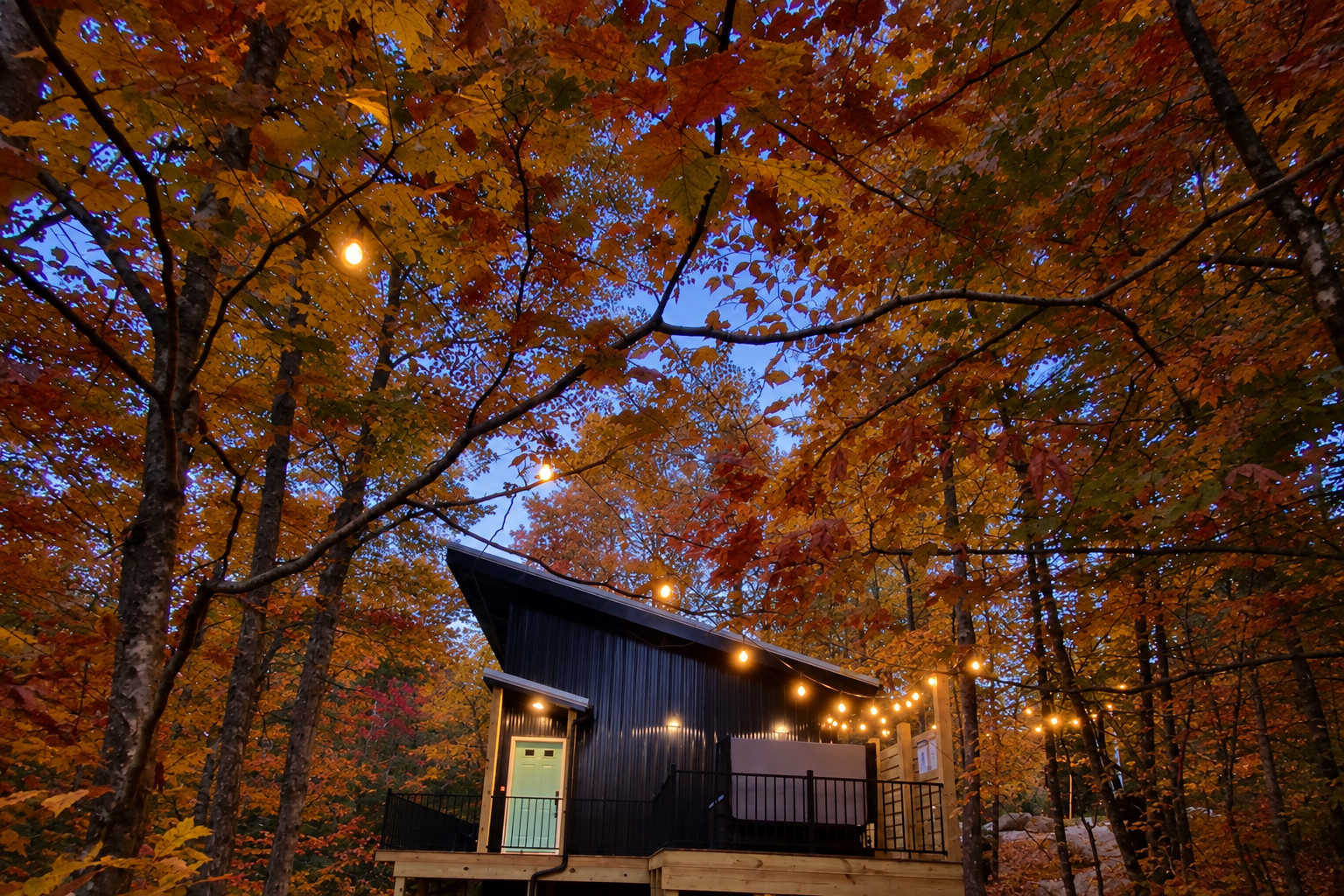
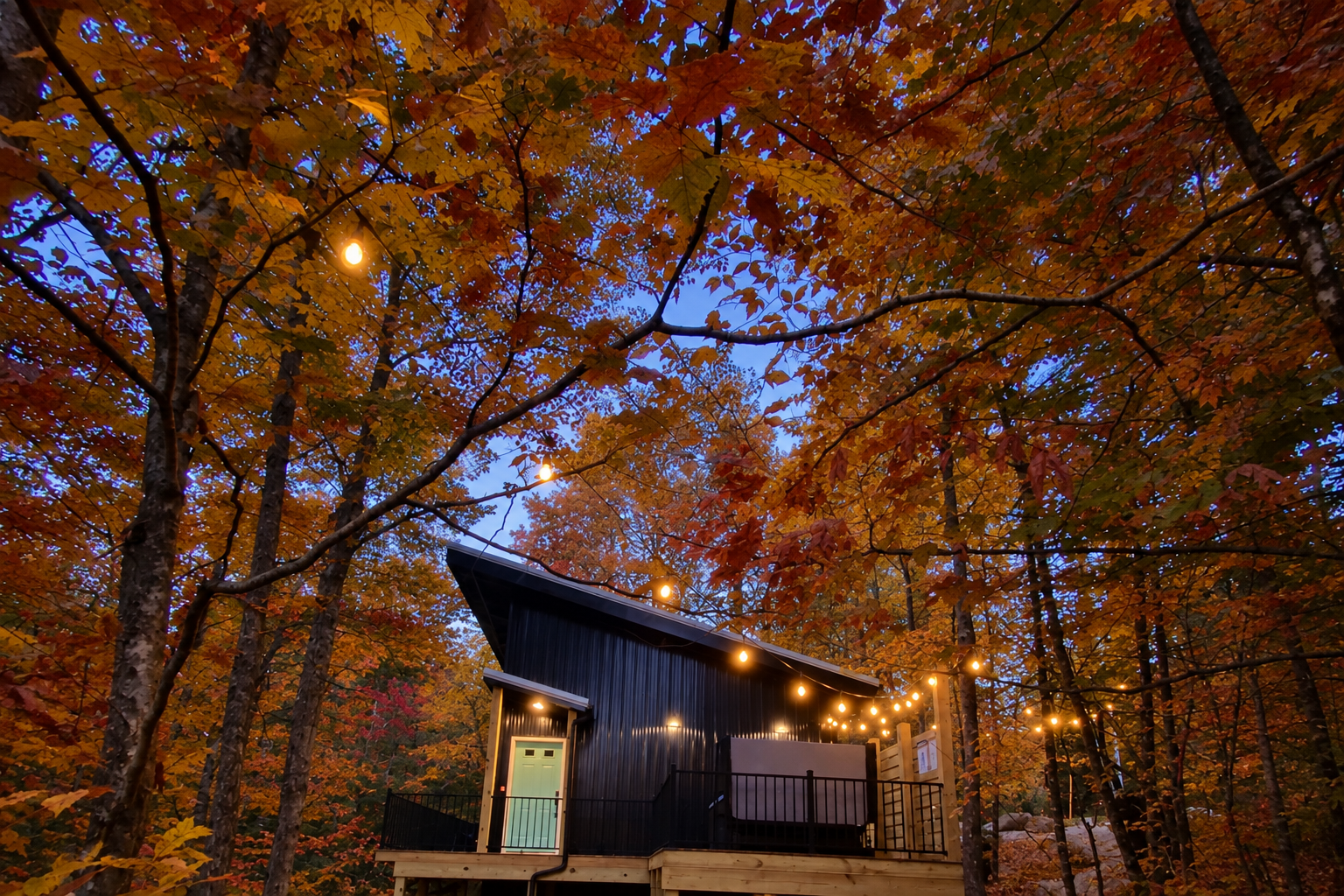
Canopy 7 at Vacation Alchemist is a treetop cabin perched above the forest canopy about 10 minutes from the main Gorge trailheads. The deck faces into the trees at canopy height, which creates natural landscape photography in every direction from the cabin itself. Sunrise from the deck and hot tub shots in fall color are a category of their own. Booking directly through vacationalchemist.com skips the service fees that third-party platforms add, and puts you in direct contact with Skip and Liz, who know the Gorge well enough to tell you exactly where the light is best on the morning you plan to shoot.

Practical Notes for Photographers

A few honest logistics worth knowing before you go.

Muir Valley is a privately owned nature preserve operated by Friends of Muir Valley, a nonprofit. It is free to enter for climbing and hiking, but there is a $15-per-vehicle daily parking fee that funds the preserve’s upkeep. If you plan to shoot the climbing walls, it is worth noting that many of the most dramatic routes are on walls that see morning shade, so afternoon light works better for the stone itself.

Indian Staircase is on a lot of photographers’ lists because the exposed sandstone scramble looks extraordinary in photos. It does. But the trail involves real, exposed scrambling that can be hazardous, particularly when the rock is wet. If you plan to shoot it, bring a friend, wear boots, and be honest with yourself about your scrambling comfort level before you commit to it.

Download offline maps before you go. Cell signal in the Gorge is inconsistent at best, and several of the best trailheads are beyond coverage. Apps like AllTrails work offline if you download the map ahead of time.

Frequently Asked Questions

When is the best time of year to photograph Red River Gorge?

Fall, specifically mid-October through mid-November, offers peak color and dramatic light. Spring wildflower season (April and May) is excellent for trail and waterfall photography. Fog is most reliable in fall and spring mornings.

What is the best time of day to photograph the arches?

It depends on the arch and the season. Generally, mid-morning to early afternoon puts direct light on most arches. Overcast days are ideal for even, shadow-free light on sandstone. Golden hour at dusk works well for overlooks facing west.

Are drones allowed in Red River Gorge?

Much of the Gorge falls within the Daniel Boone National Forest and the Clifty Wilderness. Drone use is restricted or prohibited in wilderness areas. Check current U.S. Forest Service regulations before flying. Some areas outside the wilderness boundary may allow recreational drone use with the right permits.

Is Red River Gorge good for photography in winter?

Winter is underrated for photography in the Gorge. Snow on sandstone cliffs and bare trees with ice on the creek produce striking, minimalist images you cannot get in any other season. Crowds are nearly nonexistent. Trails can be icy, so microspikes are worth packing.

What gear should I bring for photography in the Gorge?

A wide-angle lens for arches and overlooks, a telephoto for wildlife and compressed canyon views, a tripod for waterfall long exposures and low-light fog shots, and a waterproof bag or rain cover for your gear. The Gorge gets wet fast, and sudden rain is part of the deal.

Gray’s Arch: Hiking Red River Gorge’s Most Famous Arch

Gray's Arch: Hiking Red River Gorge's Most Famous Arch

Red River Gorge has more natural sandstone arches east of the Rocky Mountains than anywhere else in the country. And of all of them, Gray’s Arch is the one people talk about most. It is big, it is photogenic, and the hike to reach it rewards you in ways that a shorter trail simply cannot. If you are planning a trip to the Gorge and can only do one longer hike, this is a strong argument for making it this one.

We are Skip and Liz, and we run Vacation Alchemist, two treetop cabins about ten minutes from the main Gorge trailheads in Rogers, Kentucky. We hike these trails constantly. Consider this the trail briefing we give every guest who asks.

What Is Gray’s Arch?

Gray’s Arch is a massive freestanding sandstone arch located in the Daniel Boone National Forest within the Red River Gorge Geological Area in eastern Kentucky. It is one of the largest and most dramatic arches in the region, rising roughly 50 feet tall with a span of around 80 feet. Standing beneath it and looking up feels genuinely cinematic, the kind of moment that makes you reach for your phone and then immediately put it back down because no photo does it justice.

Unlike Natural Bridge, which sits inside a state resort park and has a sky lift option, Gray’s Arch requires a real hike to reach. That is part of what makes it special. You earn it.

How Hard Is the Hike to Gray’s Arch?

The Gray’s Arch trail is rated moderate. The standard out-and-back route runs approximately 3.4 miles round trip, with a gradual forested start that opens into steeper terrain as you approach the arch. The final descent to the arch base involves some rocky scrambling that requires sure footing. It is not a beginner trail, but it is well within reach for reasonably fit hikers who come prepared.

Expect the round trip to take roughly two to three hours depending on pace and how long you linger at the arch (you will linger). The trail is marked but can get muddy after rain, so waterproof shoes or boots make a real difference.

Your Trail Options: Out-and-Back vs. the Rough Trail Loop

You have two main ways to approach Gray’s Arch.

The out-and-back (approximately 3.4 miles). This is the most straightforward option. Park at the Gray’s Arch Trailhead, follow the trail through open hardwood forest, and descend to the arch. Return the way you came. This is the right choice for most hikers, especially on a first visit or if you have younger legs in the group.

The Rough Trail Loop (approximately 4.7 miles). For hikers who want more mileage and variety, you can connect the Gray’s Arch trail to the Rough Trail for a longer loop back to the trailhead. The name is not ironic. The Rough Trail is steep, rocky in sections, and significantly more demanding than the main arch trail. It rewards experienced hikers with deeper forest solitude and elevated ridge views. Do not let the round mileage fool you into treating it casually.

If you are unsure which to choose, go out-and-back on your first visit. You can always come back for the loop.

When Is the Best Time to Hike Gray’s Arch?

Honestly, the Gorge is worth hiking year-round, but each season delivers a genuinely different experience at Gray’s Arch.

Fall (late September through early November) is the most visually spectacular window. The hardwood canopy turns amber, orange, and deep red, and the arch frames that color in a way that stops you mid-stride. This is peak season in the Gorge for good reason. If you are going in October, go early in the morning to beat the crowds on the trail.

Spring (late March through May) brings wildflowers to the forest floor and water to the seasonal streams along the trail. The light through new-growth leaves is soft and green and genuinely beautiful. Crowds are lighter than fall, and the temperatures are ideal for hiking.

Summer means full leaf cover and shade on the trail, which is a gift on hot days. Start early to avoid afternoon heat, and carry more water than you think you need. The arch itself sits in a cool, shaded hollow that feels like a reward after a warm hike in.

Winter is the secret season. Snow or frost on the arch and the surrounding sandstone is genuinely stunning, and the bare tree canopy opens up views that disappear in warmer months. Trail traffic drops dramatically. If you are comfortable hiking in cold conditions with proper footwear, a winter trip to Gray’s Arch is worth it.

What to Bring on the Gray’s Arch Hike

This is a moderate trail, not a casual stroll. A little preparation makes the difference between a great day and a miserable one.

  • Water. More than you think. At least 16 to 20 ounces per person per hour of hiking, more in summer.
  • Sturdy footwear. Trail runners or hiking boots with real grip. The descent to the arch is rocky and can be slick.
  • Layers. The hollow near the arch stays cool even on warm days. A light layer in your pack is never a bad idea.
  • Snacks. You are going to want to sit at the arch for a while. Bring something to eat while you do.
  • A fully charged phone. Cell signal in the Gorge is inconsistent. Download an offline map before you leave. AllTrails has the Gray’s Arch route and works without signal once downloaded.
  • Trekking poles. Optional, but genuinely helpful on the descent to the arch and on the Rough Trail loop.

Tips From People Who Actually Know This Trail

A few things that do not always make it into the standard trail guides.

Arrive at the trailhead early, especially in fall. The parking area fills up faster than you would expect on a Saturday morning in October. Getting there before 8am puts you on the trail with a quieter experience and better light at the arch.

The descent to the arch base is steeper than it looks on the map. Take your time, especially on the way down. The rocks can be loose, and the footing at the base requires real attention. It is worth it. Keep going.

Once you are at the arch, walk all the way beneath it. The view looking up from directly underneath, with the sky framed by that sandstone curve, is the shot. Most people stop at the first clear sightline. Walk further.

The arch is a shelter, not a climbing structure. The sandstone at Red River Gorge is beloved by climbers, but the arch itself is not a climbing route. Respect the geology that made it possible to stand there in the first place.

Pack out everything you pack in. The Gorge stays as beautiful as it is because people treat it that way. Keep the streak going.

Combining Gray’s Arch With a Full Day in the Gorge

Gray’s Arch makes a perfect anchor for a full day out. Pair it with a second shorter trail in the afternoon, grab a meal at one of the local spots, and you have a day worth remembering.

If you want a second trail that earns its keep without the mileage commitment, Whittleton Arch is a gentle 2.6-mile round trip with a creek alongside most of the route. Princess Arch is under two miles and delivers a genuinely surprising payoff for the distance. Both are quieter than Gray’s and make excellent afternoon companions after a morning at Gray’s.

For food, the Gorge area has more options than most people expect. Sky Bridge Station pairs Kentucky microbrews on tap with gourmet hot dogs and quesadillas and is a natural post-hike stop. Red Point BBQ is a local favorite worth seeking out. If you want something more casual, The Hungry Hiker lives up to its name. And if you are in the mood for a margarita after a long day on the trail, La Cabaña delivers authentic Mexican that hits differently when your legs are tired.

Where to Stay Near Gray’s Arch

The trailhead for Gray’s Arch sits in the heart of the Red River Gorge Geological Area, roughly ten minutes from our two treetop cabins in Rogers, Kentucky. After a day on the trail, there is something genuinely restorative about soaking in a private hot tub above the forest canopy while the trees go dark around you. Each of our cabins, Canopy 7 and Canopy 9, has its own private hot tub, private fire pit, and private deck. You do not share any of that with other guests.

Booking directly through our site at vacationalchemist.com skips the service fees that third-party platforms add to every reservation, and it puts you in direct contact with us. We text hiking tips. We know which trails are muddy after rain and which parking areas fill up first. That is worth something.

Frequently Asked Questions About Gray’s Arch

How long is the Gray’s Arch hike?

The standard out-and-back route is approximately 3.4 miles round trip. A longer loop using the Rough Trail extends the hike to roughly 4.7 miles. Plan for two to three hours for the out-and-back at a relaxed pace.

Is Gray’s Arch hike good for beginners?

It is rated moderate and is accessible to hikers with a reasonable fitness level, but it is not a beginner trail. The final descent to the arch base is rocky and requires sure footing. First-timers should wear proper hiking footwear, bring plenty of water, and allow more time than they think they need. The Rough Trail loop is not recommended for beginners.

When is the best time of year to hike Gray’s Arch?

Fall (late September through early November) is the most popular window for the foliage color, but spring wildflowers, summer shade, and winter solitude each offer a genuinely different and worthwhile experience. Fall weekend mornings fill up quickly, so plan to arrive early at the trailhead.

Is there a fee to hike Gray’s Arch?

Gray’s Arch is located within the Daniel Boone National Forest. Some trailheads in the Gorge area charge a day-use fee. Check with the USDA Forest Service or the Red River Gorge Climbers Coalition for current parking and access fee information before you go, as fees and rules can change.

What is the difference between Gray’s Arch and Natural Bridge?

Both are sandstone arches in the Red River Gorge area, but they are distinct in character. Natural Bridge sits within Natural Bridge State Resort Park, has a staffed visitor center, and offers a seasonal sky lift to the top alongside the hiking trail. Gray’s Arch is in the backcountry of the Daniel Boone National Forest, requires a real hike to reach, and has a wilder, more remote feel. Many visitors do both on the same trip.

Best Waterfalls Near Red River Gorge

Best Waterfalls Near Red River Gorge

Red River Gorge is famous for sandstone arches and world-class climbing, but its waterfalls are one of the Gorge’s best-kept secrets. Tucked into creek hollows, spilling over overhanging rock shelters, and threading alongside some of the area’s quietest trails, these falls reward hikers who look slightly past the marquee destinations. Some are a short walk from the parking area. Others ask for a few miles of genuine effort first. All of them are worth it.

This guide covers the best waterfalls near Red River Gorge, ranked from easiest to hardest, with honest notes on trail conditions, what you will actually see, and how to build each one into a full Gorge weekend. When you are ready to base camp in the trees, the two treetop cabins at Vacation Alchemist sit about 10 minutes from the main trailheads and are the kind of place you do not want to leave in the morning.

Why Red River Gorge Has So Many Waterfalls

The Gorge sits inside the Daniel Boone National Forest in eastern Kentucky, carved over millions of years by the Red River and its tributary creeks cutting through layered sandstone. That geology is the reason the area has the highest concentration of natural arches east of the Rocky Mountains, and it is also the reason waterfalls appear around almost every bend. Water finds every crack in the stone and spills accordingly. After a rain, the whole Gorge runs.

The best waterfall season in the Gorge is late fall through early spring, when leaf-off opens the views and recent rainfall keeps the creeks full. That said, most of these falls hold water year-round, and fall specifically is stunning: the foliage frames the stone in amber and rust before the leaves drop and the sky opens up. Plan around recent rainfall for maximum flow.

The Best Waterfalls Near Red River Gorge, Easiest to Hardest

Creation Falls (Rock Bridge Loop), Easy

Creation Falls is the most accessible waterfall in the Gorge and one of the most photographed. It sits inside the Rock Bridge Loop, a roughly 1.5-mile trail that starts at the Rock Bridge Scenic Picnic Area. The loop also passes Rock Bridge itself, the only natural arch in the Gorge with a stream running underneath it, which makes this a two-for-one hike.

Creation Falls drops into a wide, sheltered alcove of sandstone. The overhang above it keeps the pool shaded and cool even in summer, and the acoustics in that hollow are remarkable. First-timers to the Gorge often start here and immediately understand what all the fuss is about. Total trail time for a relaxed loop is under two hours. Good for families, good for anyone who wants a genuine waterfall without a strenuous day.

Copperas Creek Falls, Moderate

Copperas Creek Falls is the kind of waterfall that earns its reputation the hard way, and that is what makes it feel special. The hike follows Copperas Creek through one of the quieter hollows in the Gorge, with the trail crossing the creek multiple times and running alongside it for long stretches. The sound of moving water accompanies almost the entire walk in.

What makes Copperas Creek Falls particularly interesting is the approach: you can get behind the falls. The overhang is generous enough to stand beneath the curtain of water and look out through it, which is one of those experiences that photographs poorly and lodges in memory permanently. Plan for creek crossings and wear shoes that can get wet, especially after rain. The trail can be muddy. This is not a manicured path, and that is exactly the point.

Distance varies by the specific trailhead you use, but expect roughly 2 to 4 miles round trip depending on your approach. Moderate effort. Absolutely worth it.

Whittleton Arch Area Falls, Easy to Moderate

The Whittleton Arch trail (roughly 2.6 miles round trip) follows a gentle creek-side path that most people hike for the arch itself, a wide sandstone span that feels almost hidden given how modest the approach is. What fewer people notice is that the creek along this trail produces a series of small cascade falls, especially in wetter months. None of them are dramatic standalone destinations, but the cumulative effect of moving water alongside a quiet forest trail is peaceful in a way the busier trailheads rarely are.

Whittleton is a good choice when the main parking areas are full, which on a fall weekend they often will be. The trail sees less traffic than Gray’s Arch or Natural Bridge and the creek-side walking is some of the most pleasant in the area. Easy enough for a confident family hiker, modest enough that you will not be exhausted before dinner.

Gray’s Arch Area and Rough Trail Falls, Moderate to Hard

The Rough Trail and the network of paths that connect to Gray’s Arch thread through some of the wettest, most dramatic terrain in the Gorge. Seasonal cascades appear along the Rough Trail after rainfall, dropping off sandstone ledges into the creek hollows below. These are not named, permanent falls in the classic sense, but they can be substantial in late fall and early spring and are almost completely unknown to visitors who stick to the main arches.

The Gray’s Arch trail itself is roughly 3.4 miles out and back, with a longer loop option around 4.7 miles via the Rough Trail. The Rough Trail section earns its name: steep, rocky, and genuinely demanding in spots. If you extend your Gray’s Arch day onto the Rough Trail to look for the seasonal falls, bring plenty of water, appropriate footwear, and honest expectations about the terrain. This is not a beginner route.

Indian Staircase Area Falls, Hard, Scramble Required

The Indian Staircase trail (approximately 2.9 miles) involves real, exposed sandstone scrambling that can be dangerous in wet conditions. It is listed here because the terrain around it produces some of the most dramatic water movement in the Gorge after heavy rain, particularly along the cliff-line approaches. But this route should only be attempted by hikers with scrambling experience, ideally with someone who has been there before. Never attempt it in wet weather. The views and the falls you encounter on a clear, dry day are extraordinary. The scramble sections are unforgiving when the rock is slick.

This is the one on the list that earns a genuine safety note: tell someone where you are going, check the forecast, and do not push past your comfort level on the exposed sections. The Gorge rewards careful hikers.

Tips for Chasing Waterfalls in Red River Gorge

Go after rain. All of these falls are better with recent rainfall behind them. A dry spell in late summer can reduce some to a trickle. The two to three days after a good rain are the sweet spot: the water is running, the mud has had time to firm up slightly, and the creeks are dramatic without being dangerous.

Wear real shoes. The creek crossings on the Copperas Creek trail and the wet rock near several of these falls turn trail runners into a liability if they have no grip. Waterproof hiking boots or trail shoes with solid lugs are the honest recommendation.

Start early. Gorge parking lots, particularly at the Rock Bridge area and the Rough Trail trailheads, fill up fast on fall weekends. Being on trail by 8am is not excessive. It also means you have the falls to yourself for at least part of the morning, which is a meaningfully different experience than arriving at noon with a crowd.

Bring a dry bag for your phone. These trails are genuinely wet. The kind of wet that gets into jacket pockets.

Where to Stay Near Red River Gorge Waterfalls

All of the trails above are within roughly 10 to 20 minutes of Rogers, Kentucky, where the two treetop cabins at Vacation Alchemist sit above the forest canopy. Each cabin has its own private hot tub, private fire pit, and private deck into the trees, and there is nothing better after a full day of creek crossings and waterfall hunting than soaking in that hot tub while the woods go dark around you.

Booking directly through vacationalchemist.com skips the service fees that third-party platforms like Airbnb and VRBO add to every reservation, and it also puts you directly in touch with Skip and Liz, who will text you the actual parking spots, the trail conditions they have heard about that week, and which falls are running well after the recent rain. That local knowledge is part of the stay.

The Best Time to See Waterfalls Near Red River Gorge

Late October through early December is quietly the best window for waterfall hunting in the Gorge. The leaves have come off or are coming off, which opens views of the stone faces and the cliff lines that you simply cannot see in full summer. The creeks are refilling after the dry season. The light in the afternoons is low and golden and hits the water beautifully. And the trails are dramatically less crowded than October’s peak foliage weekend crush.

Spring runs a close second. Snowmelt and April rain keep the creeks full, the wildflowers come up alongside the trails, and the Gorge smells like wet stone and new leaves. Both seasons are genuinely worth planning around.

Frequently Asked Questions

What is the easiest waterfall hike at Red River Gorge?

The Rock Bridge Loop to Creation Falls is the easiest waterfall hike in the Gorge. It is roughly 1.5 miles with manageable elevation, and it also passes Rock Bridge, the only arch in the area with a stream running beneath it. Good for most ages and experience levels.

Can you get behind Copperas Creek Falls?

Yes. The overhang at Copperas Creek Falls is generous enough to stand beneath the falls and look out through the water curtain. The approach trail involves creek crossings and can be muddy, so waterproof footwear is a practical choice rather than an optional one.

When is the best time to visit Red River Gorge for waterfalls?

Late fall through early spring is the best window for waterfall flow, particularly in the two to three days after significant rainfall. Late October through December offers the bonus of leaf-off views that open the cliff faces. Spring brings snowmelt and reliable creek levels alongside early wildflowers.

Are the waterfall trails in Red River Gorge family friendly?

Some are, some are not. Creation Falls via the Rock Bridge Loop and the Whittleton Arch trail are suitable for families with children who are comfortable on natural surfaces. The Copperas Creek trail requires creek crossings and is better for older kids. The Rough Trail and Indian Staircase routes are not appropriate for young children or inexperienced hikers.

Is there a fee to hike in Red River Gorge?

Many trailheads in the Daniel Boone National Forest require a parking fee or accept an America the Beautiful pass. Muir Valley, a premier climbing preserve in the area, has a $15-per-vehicle daily parking fee but no admission charge to climb. Specific fee structures can change, so check current information before your visit.

The Perfect Fall Weekend in Red River Gorge

The Perfect Fall Weekend in Red River Gorge

Why Fall Is the Best Time to Visit Red River Gorge

There is a version of Red River Gorge that most people never see. Not because it is hidden or hard to find, but because you have to show up at the right time of year. That time is fall.

From mid-October through the end of the month, the sandstone walls of the Daniel Boone National Forest get framed in amber, rust, and gold. The air cools to hiking temperature. The crowds thin out just enough. And the Gorge does something it cannot quite manage in July or February: it feels completely, genuinely alive.

Planning a fall weekend in Red River Gorge does not need to be complicated. But it does need to be intentional. This guide covers the hikes, the food, the logistics, and the honest details that make the difference between a good trip and one you will be talking about for years.

When Do Fall Colors Peak at Red River Gorge?

Peak fall color at Red River Gorge typically arrives in the second and third weeks of October, with higher ridgelines and exposed areas turning first. The valley floors and creek hollows usually hold their color through the last week of October. If you are chasing peak saturation, aim for October 12 through 25 as your target window. Come too early and the maples are still green. Come too late and the wind has already done its work.

That said, even the week before peak is stunning. The Gorge in early October, with partial color and warm afternoons, is one of the most underrated travel windows in eastern Kentucky.

The Best Fall Hikes at Red River Gorge

The Gorge has over 100 miles of trail inside the Daniel Boone National Forest and the Clifty Wilderness. Fall makes almost all of them better. These are the ones worth prioritizing on a weekend trip.

Auxier Ridge and Courthouse Rock (Moderate, 5.9 to 6.5 miles)

This is the fall hike. The exposed ridgeline gives you panoramic views of the Gorge in every direction, and when those views are filled with color, you will understand why people drive four hours for this. It is a longer day with real elevation, so go early, bring water, and wear shoes that grip. The ridgeline is exposed and the footing is uneven in spots.

Gray’s Arch (Moderate, 3.4 miles out and back)

One of the most dramatic arches in the region, and the trail through the forest to reach it is exactly what fall foliage was made to showcase. The approach is mostly flat forest walking before a steeper climb near the arch itself. Do the full Rough Trail loop (around 4.7 miles) if your legs are willing.

Natural Bridge (Easy, short and steady)

The 78-foot sandstone arch at Natural Bridge State Resort Park is the classic entry point for a reason. The Original Trail is a short, steady climb that most hikers can handle. If you would rather skip the climb, the seasonal Sky Lift runs roughly April through November and puts you at the top in about eleven minutes. Go at golden hour if you can. The light through the arch in October is its own reward.

Rock Bridge Loop (Easy, about 1.5 miles)

Perfect for a morning before a bigger afternoon, or for hiking with someone who is newer to trail walking. The loop passes Creation Falls and ends at Rock Bridge, the only arch in the Gorge with a stream running directly beneath it. Short, beautiful, and genuinely surprising every time.

Whittleton Arch (Easy, 2.6 miles round trip)

A creek-side walk through quiet forest that pays off with a sandstone arch most first-timers have never heard of. The trail stays mostly gentle the whole way, which makes it a good option for a slower morning or a sunset walk with good shoes.

Indian Staircase (Hard, 2.9 miles but exposed)

Worth mentioning only for experienced hikers who want a real challenge. This trail involves genuine sandstone scrambling on exposed rock. It is not a beginner route and it is not a casual fall colors walk. If that sounds like you, it is unforgettable. If it does not sound like you, pick Gray’s Arch instead.

What to Do Beyond the Trails

Climb at Muir Valley

Muir Valley is one of the premier sport-climbing destinations in the eastern United States, with more than 30 walls managed by the nonprofit Friends of Muir Valley. There is no admission charge, but there is a $15 per vehicle daily parking fee that funds trail and wall upkeep. If you are visiting more than once or twice a year, a membership earns you an annual parking pass. The walls stay climbable well into fall, and the cooler temperatures are actually ideal for friction-dependent movement on sandstone.

Gorge Underground

If you have never paddled through a flooded abandoned limestone mine, now is the time. Gorge Underground in Slade offers guided kayak, paddleboard, and boat tours through an underground lake that is equal parts surreal and genuinely cool. Glass-bottom kayaks and neon-lit options are available. Tours run about an hour. Reservations are strongly recommended in fall, when demand is high.

Mushroom Grove Shopping Village

About fourteen shops line an elevated boardwalk near the Gorge, including outdoor outfitters, handmade gift shops, and the kind of snack and ice cream stops that feel essential after a long trail day. Raven’s Crest Outfitters carries outdoor clothing and gifts and is known for a Sasquatch-themed section that is either delightful or deeply strange depending on your mood. Either way, worth a stop.

Where to Eat: A Fall Weekend Rotation

The area around Red River Gorge has more good food than most people expect. Here is a rotation that covers a full weekend without repeating yourself.

Friday night: Red River Rockhouse serves American fare and hosts live music on select nights. A good way to land in the Gorge and ease into the weekend.

Saturday morning: Daniel Boone Coffee Shop in Slade is a reliable first stop. Good coffee, easy location, and you can be on the trail by 9am without rushing.

Saturday lunch: Miguel’s Pizza has been feeding climbers since 1984 and has earned every bit of its reputation. Made-to-order pizza at a pace that does not feel hurried. The campground out back tells you everything about what kind of place it is.

Saturday evening: Thatcher Barbecue Company in Slade is a newer spot with genuine downhome barbecue. Red Point BBQ is another local favorite worth adding to the list depending on what sounds good.

Sunday: La Cabaña turns out authentic Mexican food including tacos, burritos, and margaritas. A surprisingly good reset after a full day on the trail. Sky Bridge Station is another option, with gourmet hot dogs, quesadillas, and roughly twelve Kentucky microbrews on tap alongside a gear shop, which is a combination that somehow works perfectly.

Note that many spots in the area keep seasonal hours, so it is worth confirming directly before you drive out of your way.

Where to Stay: A Treetop Base Camp

Everything above is more enjoyable when you come home to something good. At Vacation Alchemist, Skip and Liz Wolfe operate two luxury treetop cabins in Rogers, Kentucky, about ten minutes from the main Gorge trailheads. Each cabin has its own private hot tub, private fire pit, and private deck into the forest canopy.

Canopy 7 leans adventure-forward: perched high, sunrise-facing, and designed for the kind of traveler who wants to be in the trees as much as on the trails. Canopy 9 brings mid-century modern design into the wilderness, a combination that sounds contradictory until you see it in person.

Both are direct-book only. No Airbnb, no third-party platform. Just a direct line to the hosts, who will text you trail conditions and stock the cabin with snacks you did not know you needed.

Fall weekends at the Gorge go fast. The kind of October Saturday that looks perfect on a weather app tends to book out weeks before it arrives. If a fall weekend is on your radar, now is the window to lock it in.

What to Pack for a Fall Weekend in Red River Gorge

Fall in eastern Kentucky swings hard between warm afternoons and genuinely cold mornings. A Saturday at the Gorge can start at 42 degrees and reach 68 by noon. Pack for both ends.

Layers are the non-negotiable. A moisture-wicking base layer, a mid-layer fleece, and a wind or rain shell covers you from dawn to dusk on most fall days. Hiking shoes with real grip matter more in fall than in summer: wet leaves on sandstone are slicker than they look. Bring trekking poles if you have them, especially if the Auxier Ridge loop is on your list.

For the evening: the hot tub under a clear October sky is its own kind of perfect. Bring a swimsuit and a hoodie and plan to stay out longer than you intend to.

Frequently Asked Questions

When is peak fall foliage at Red River Gorge?

Peak fall color typically arrives in the second and third weeks of October, with ridgeline areas turning first and valley floors holding color through the last week of the month. October 12 through 25 is generally the best window to catch peak saturation.

How far is Red River Gorge from Lexington?

Red River Gorge is roughly one to one and a quarter hours southeast of Lexington, Kentucky, in the Daniel Boone National Forest near Slade.

Is Red River Gorge good for beginners?

Yes. Trails like the Rock Bridge Loop, Whittleton Arch, and the Natural Bridge Original Trail are accessible for most hikers, including families. Moderate trails like Gray’s Arch are manageable with reasonable fitness. The harder scramble routes like Indian Staircase are strictly for experienced hikers and should not be attempted casually.

Is Muir Valley free to visit?

Muir Valley is free to climb, but there is a $15 per vehicle daily parking fee. The preserve is operated by the nonprofit Friends of Muir Valley and the parking fee funds ongoing upkeep. A membership can earn you an annual parking pass if you visit frequently.

What is Gorge Underground?

Gorge Underground offers guided kayak, paddleboard, and boat tours through a flooded abandoned limestone mine in Slade. Tours run approximately one hour and include options like glass-bottom kayaks and neon-lit experiences. Reservations are recommended, especially during fall peak season.

Do I need to book a fall cabin stay far in advance?

October weekends at Red River Gorge fill up significantly earlier than most travelers expect. If you are targeting the peak foliage window in mid-to-late October, planning several weeks out gives you the best selection.

Red River Gorge Fall Foliage: When & Where to See Peak Color

Red River Gorge Fall Foliage: When & Where to See Peak Color

Red River Gorge Fall Foliage: When Does It Actually Peak?

The short answer: the best Red River Gorge fall foliage typically runs from mid-October through early November, with the most vivid color landing in the window of October 15 through 31. Higher elevations and ridgelines turn first, often showing early color in the first two weeks of October. The valley floors and creek hollows hold their color longer, sometimes stretching into the first days of November.

The longer answer: no two years are exactly alike. A dry summer speeds the timeline. A warm September can push peak toward Halloween. A wet, cool fall slows it down and deepens the reds. What you can count on is that the Gorge always delivers, because the topography here does something special with light and color that flatland forests simply cannot match.

Why Red River Gorge Is the Best Place in Kentucky to See Fall Color

Red River Gorge sits inside the Daniel Boone National Forest in eastern Kentucky, and its terrain is the reason it consistently ranks as the top leaf-peeping destination in the state. The canyon walls drop hundreds of feet in places, which means you can stand at a ridgeline overlook and look directly into a canopy of orange, gold, and deep crimson spread below you like a quilt. You are not walking through the color. You are standing above it.

The forest mix matters too. Sugar maples go neon orange. Sourwoods and black gums blaze red weeks before everything else. Tulip poplars turn a clear, clean yellow. Oaks hold a burgundy that lasts well into November. At peak, a single overlook can show you six or seven distinct shades firing at once.

The Gorge also has the kind of features that make fall color even more dramatic: sandstone arches framing orange hillsides, waterfalls threading through leaves, creek hollows where the color reflects off still water. It photographs the way it looks in person, which is rare.

The Best Trails for Fall Foliage at Red River Gorge

Not every trail gives you the same view of fall color. Here are the ones worth prioritizing, organized by what kind of experience you are after.

For the Big Overlook View

Auxier Ridge / Courthouse Rock / Double Arch loop is the single best trail in the Gorge for fall color from above. The loop runs roughly 5.9 to 6.5 miles and puts you on an exposed ridgeline with open views in multiple directions. In October, that ridgeline looks directly down into a sea of color. Go early, bring water, and know that the exposed sections have real drop-offs. This is a moderate-to-hard hike, not a casual stroll.

Tower Rock offers similar payoff with a shorter approach. The summit view is one of the most photographed in the Gorge, and in fall the canyon stretches out below you in every direction.

For Arches Framed in Fall Color

Gray’s Arch is a classic for a reason. The trail runs about 3.4 miles out and back, with a flat forest start and a steeper push near the arch. In October, the sandstone framed against orange and gold hillside is exactly what you came to Kentucky for.

Natural Bridge State Resort Park gives you the most iconic arch in the Gorge, a sandstone span roughly 78 feet wide and 65 feet high, and if you time it right the valley below turns completely gold. The Original Trail is a short, steady climb. A seasonal Sky Lift (running roughly April through November) offers the view without the climb, which is worth knowing if you are visiting with kids or anyone who wants the scenery without the effort.

Whittleton Arch is the underrated choice. The round trip is about 2.6 miles of mostly gentle creek-side walking, and because it does not get the same crowds as Gray’s or Natural Bridge, you might have the arch to yourself on a Tuesday in October. The arch itself is quieter in character too, tucked into the hillside rather than spanning open sky, and the creek walk through fall color is genuinely lovely.

For Waterfalls and Hollows

Rock Bridge Loop is a roughly 1.5-mile loop that passes Creation Falls and Rock Bridge, the only arch in the Gorge with a stream running beneath it. In fall, the combination of moving water, stone, and color is as good as anything in the region. This is an easy trail and a great choice if you are bringing family or want a shorter day.

For Climbers

Fall is widely considered the best climbing season at Red River Gorge. The temperatures drop into a range that is ideal for friction on sandstone, the humidity falls, and Muir Valley, one of the premier sport-climbing nature preserves in the country with more than 30 walls of routes, is at its absolute best in October light. There is no admission charge to climb, but there is a $15-per-vehicle daily parking fee that funds preservation and upkeep, managed by the nonprofit Friends of Muir Valley. If you are a regular visitor, a membership or volunteer day can earn you an annual parking pass. Whatever you pay, it is worth it.

What to Do When You Are Not on the Trail

A fall trip to Red River Gorge is not just about the hiking. The area has genuinely good food and a few experiences that round out a long weekend in the best way.

Gorge Underground runs guided kayak and paddleboard tours through a flooded abandoned limestone mine in Slade. The neon-lit kayak option sounds like it should feel gimmicky and somehow does not at all. Tours run about an hour and book up in fall, so reserve ahead. It is a completely different experience from anything else in the area, and a smart thing to do on a drizzly afternoon when the trails are muddy.

Sky Bridge Station is the kind of place you end up staying at longer than you planned. It is a restaurant, tap house, and gear shop with a rotating lineup of Kentucky microbrews and a menu built around gourmet hot dogs and quesadillas. Sitting outside with a beer after a long fall hike is one of the better ways to spend an October evening in eastern Kentucky.

Red River Rockhouse does American fare and live music, and in fall the combination of good food and a warm room after a cold day on the ridge is exactly what you need. Thatcher Barbecue Company in Slade is the spot if you want downhome barbecue done seriously. 145 Roadhouse in Campton has bourbon burgers, catfish, steaks, smoked meats, and live music on weekends, and it is the kind of place that feels very specifically like eastern Kentucky in a way you will not find anywhere else.

Mushroom Grove Shopping Village is worth an hour of your afternoon. About 14 unique shops line an elevated boardwalk, including outdoor outfitters, handmade gifts, and Raven’s Crest Outfitters, which carries outdoor clothing, Gorge gear, and a Sasquatch-themed section that is more fun than it sounds. Pick up your trail snacks, a sticker for your water bottle, and a bag of fudge from the general store and call it a productive afternoon.

How to Plan Your Fall Trip Around Peak Color

Here is the practical version of the timeline, so you can book with confidence.

Early October (1st through 14th): Higher ridgelines and elevations start to show early color, especially sourwoods and black gums. The crowds have not fully arrived yet. If you want the trails without the weekend traffic, this is your window. The temperatures are comfortable for long days on the ridge.

Mid to Late October (15th through 31st): This is peak. Sugar maples are full orange, tulip poplars are yellow, and the ridgeline views are at their most saturated. This is also when demand for treetop accommodations near the Gorge is highest, so plan ahead. The October weekends in particular go fast.

Early November: The oaks hold their burgundy color well into the first weeks of November, and the crowds thin out noticeably after Halloween. If you want peak color without peak people, a November weekday trip can be genuinely magical. The light is lower, the shadows are longer, and the Gorge feels like it belongs to you.

A few practical notes worth keeping in mind: ridge trails are exposed, so a cool October morning can turn cold in the wind. Bring a real layer. The trails at RRG involve real elevation change and sandstone scrambling in places, so wear actual hiking shoes, not sneakers. Drink more water than you think you need. Parking at popular trailheads like Gray’s Arch and the Auxier Ridge area fills up early on fall weekends, so aim for a 7am start if you want a spot.

If you want to stay close to the action, treetop cabins near the Gorge are a very different experience from a hotel in Lexington or a chain near the interstate. Waking up inside the canopy, watching the light come through October leaves from your deck, is the kind of thing that is hard to explain but easy to understand once you have done it. Vacation Alchemist has two treetop cabins in Rogers, Kentucky, each with a private hot tub and a fire pit, and October is when they feel most like themselves. If a fall trip is something you have been saying you will take someday, this is the year to stop saying it.

Frequently Asked Questions About Red River Gorge Fall Foliage

When is peak fall foliage at Red River Gorge?

Peak Red River Gorge fall foliage typically falls between October 15 and October 31. Higher ridgelines show early color in the first two weeks of October, while valley floors and hollows often hold color into early November. Exact timing varies by year depending on summer rainfall and fall temperatures.

What is the best hike for fall foliage views at Red River Gorge?

Auxier Ridge gives you the most dramatic open ridgeline views of the fall canopy spread below, making it the top choice for color from above. For a shorter, easier option with strong fall scenery, the Rock Bridge Loop combines a waterfall, a sandstone arch, and creek-side color in about 1.5 miles.

Is Red River Gorge crowded in October?

October weekends at Red River Gorge are busy. Popular trailhead parking lots, especially at Gray’s Arch and Auxier Ridge, fill early on Saturday and Sunday mornings during peak color. Starting before 8am and visiting on weekdays significantly reduces crowds. Early November after Halloween sees a noticeable drop in traffic.

What should I pack for a fall hike at Red River Gorge?

Bring real hiking shoes (the sandstone scrambles on routes like Indian Staircase and parts of Auxier Ridge are not sneaker-friendly), a packable wind layer for exposed ridgelines, more water than you think you need, and a headlamp if you are doing longer routes. Fall mornings in the Gorge start cold and warm up by midday.

Is Red River Gorge worth visiting outside of peak fall color?

Yes. The Gorge has year-round appeal: spring wildflowers in April and May, world-class rock climbing in spring and fall, swimming holes and river paddling in summer, and a genuinely magical quality to a snowy winter morning on the ridge. Fall is the peak season for color, but it is not the only reason to go.

How to Plan a Red River Gorge Trip

How to Plan a Red River Gorge Trip

How to Plan a Red River Gorge Trip (The Honest Local Guide)

The Red River Gorge keeps getting discovered. Named one of America’s most underrated destinations, it has been pulling in hikers, climbers, and anyone who has ever looked at a photo of fog sitting in a sandstone canyon and felt something. If you are planning your first trip, or trying to stop wasting days figuring it out on the fly, this guide will help you do it right.

We are Skip and Liz Wolfe. We built two treetop cabins here in Rogers, Kentucky, and we have spent years learning the Gorge trail by trail, plate by plate. This is the guide we wish existed when we arrived.

How Long Do You Need for a Red River Gorge Trip?

A weekend (Friday evening through Sunday) gives you enough time to hit the highlights without feeling rushed. Three nights is the sweet spot most guests land on. Four nights or more lets you slow down, repeat a favorite trail in different light, and actually unwind instead of just checking boxes.

If you only have one full day, pick one arch, one restaurant, and one sunset. Do not try to do everything. The Gorge rewards people who linger.

When Is the Best Time to Visit Red River Gorge?

Every season has a real argument for it.

Fall (mid-September through early November) is peak season for good reason. The hardwood canopy turns gold, orange, and red across the canyon walls. Temperatures are ideal for hiking, the crowds thin out on weekdays, and the light does extraordinary things in the afternoon. Book early; fall weekends fill up fast.

Spring (March through May) brings wildflowers, waterfalls running full, and a freshness in the air that is hard to describe and easy to feel. Trillium and Virginia bluebells line the creek trails. Climbing season opens back up and the walls fill with visitors from across the country.

Summer means swimming holes, full canopy shade on the trails, and some of the best stargazing you will find anywhere in Kentucky. Humidity is real, so start hikes early and plan around it.

Winter is the secret season. Snow on the sandstone looks like something from a film set. The trails are nearly empty. Sitting in a hot tub while the bare forest stretches out below you is a specific kind of quiet that is hard to find anywhere else.

Where to Stay at Red River Gorge

Options range from primitive camping to lodge rooms to private cabin rentals. If you want the full experience, a private cabin puts you in the trees rather than looking at them through a parking lot. Our two treetop cabins, Canopy 7 and Canopy 9, sit in Rogers, Kentucky, about 10 minutes from the main trailheads. Each has its own private hot tub, private fire pit, and a deck that hangs out over the forest canopy. Canopy 7 is adventure-forward and perched high for early risers and star chasers. Canopy 9 leans mid-century modern for design-conscious travelers and couples celebrating something worth celebrating.

When you are ready to lock in your dates, you can browse both cabins and book directly at Vacation Alchemist. Booking direct means you are dealing with us, not a platform, which matters when you text at 11pm asking which arch is worth the detour.

The Best Trails in Red River Gorge (By Ability Level)

Red River Gorge sits inside the Daniel Boone National Forest and holds the highest concentration of natural sandstone arches east of the Rocky Mountains. There is no shortage of trails, and the quality is consistently high. Here is an honest breakdown by difficulty.

Easy Trails (Great for Families and First-Timers)

Natural Bridge (Original Trail) is the classic for a reason. It is a short, steady climb to the main 78-foot sandstone arch, roughly 65 feet high. If hiking is not in the cards, a seasonal Sky Lift (running approximately April through November) takes you up in about 11 minutes. Either way, the arch is worth it.

Rock Bridge Loop is about 1.5 miles and passes both Creation Falls and Rock Bridge, the only arch in the Gorge with a stream running beneath it. This one tends to fly under the radar and it probably should not.

Whittleton Arch is roughly 2.6 miles round trip, mostly gentle creek-side walking, with a rewarding arch at the end. Quieter than the marquee trails, especially on weekend mornings when everywhere else has a full parking lot.

Moderate Trails (Some Elevation, Worth the Effort)

Gray’s Arch runs about 3.4 miles out and back, with the forest staying flat for a while before a steeper push near the arch itself. The arch is massive. Bring water and expect some company on weekends.

Auxier Ridge to Courthouse Rock and Double Arch is one of the best full-day hikes in the Gorge. The loop runs roughly 6 miles with some of the most exposed ridgeline views you will find east of the Rockies. Not for people who are uncomfortable with height, and worth every step for people who are not.

Princess Arch is a shorter hike (under 2 miles) with a high payoff and a great choice when your legs are tired or your window is short.

Hard Trails (Experience Required)

Indian Staircase is about 2.9 miles but involves real, exposed sandstone scrambling. It is genuinely fun for experienced hikers and genuinely dangerous for people who underestimate it. Go with someone who has done it before, wear shoes with grip, and do not bring kids who are not strong climbers.

Rough Trail earns its name. Steep, rugged, rocky. Beautiful. Go prepared.

Across all trails: bring more water than you think you need, wear real shoes (not sandals on any scramble), and check trail conditions before you go. The Gorge is not a manicured park; the terrain is real and it asks a little respect in return.

Climbing at Red River Gorge

RRG is one of the premier sport-climbing destinations in the country, and if you climb at all, you already know this. Muir Valley is a privately owned nature preserve managed by the nonprofit Friends of Muir Valley. It is free to climb but charges a $15-per-vehicle daily parking fee that funds trail and wall maintenance. There are more than 30 walls and the quality of the routes is consistently excellent. Arrive early on weekends. Muir Valley memberships and volunteer days can earn an annual parking pass.

The larger Gorge area has dozens of additional walls across both public and private land. Sky Bridge Station, which serves as a restaurant, tap house, and gear shop all in one, is a good local resource for beta on current conditions.

Where to Eat Near Red River Gorge

This is the part most trip-planning guides skip, and it matters. The Gorge area has a genuinely good food scene. A few worth building a meal around:

Miguel’s Pizza in Slade has been feeding climbers since 1984. Made-to-order pizza, a campground out back, and a steady line out the door on weekends for good reason. Do not skip it if you have not been.

Thatcher Barbecue Company in Slade opened in 2021 and has built a loyal following fast. Downhome barbecue done right.

Sky Bridge Station serves gourmet hot dogs and quesadillas alongside about 12 Kentucky microbrews on tap. It is a great mid-day stop that doubles as a gear shop if you forgot something.

145 Roadhouse in Campton is the move for a sit-down dinner with bourbon burgers, catfish, steaks, smoked meats, and live music on weekends. Plan for it on a Friday or Saturday night.

La Cabaña serves authentic Mexican, tacos, burritos, and margaritas, and it hits the spot after a long day on the trail.

Most spots keep seasonal hours and things change, so check directly before you go. The area also has a general store in Slade with camping essentials, ice cream, and fudge, which covers most of your between-meal needs.

Beyond the Trails: Other Things to Do

Gorge Underground runs guided kayak and paddleboard tours through a flooded abandoned limestone mine in Slade. The glass-bottom and neon-lit kayak options are genuinely surprising. Tours run about an hour and fill up fast in busy season, so reserve ahead.

The Red River has calmer stretches that are well-suited for tubing and family-friendly paddling.

Mushroom Grove Shopping Village is a boardwalk of about 14 shops near the Gorge with boutique clothing, outdoor gear, handmade gifts, ice cream, and a gem-mining attraction for kids. Worth an hour of browsing on a slow afternoon.

Stargazing from a private deck on a clear night is its own activity. The light pollution out here is low enough that the Milky Way is not a special occasion. It is just what Tuesday looks like.

A Sample Red River Gorge Itinerary (3 Nights)

Day 1 (Arrival Day): Get in, get settled, and do not over-schedule. Drive the Gorge loop, stop at one overlook, and pick up dinner or groceries in Slade. Fire pit and hot tub in the evening. The trip starts when you stop trying to optimize it.

Day 2 (Full Day): Early start on a trail that matches your ability level. Gray’s Arch or Auxier Ridge if you are comfortable with mileage. Natural Bridge or Rock Bridge Loop if you want something shorter. Lunch at one of the local spots in Slade. Afternoon visit to Muir Valley if you climb, or the Red River if you do not. Dinner at 145 Roadhouse or Sky Bridge Station.

Day 3 (Second Full Day): Hit a trail you skipped on day 2, or return to a favorite in different light. Late morning works well on trails that were crowded the day before. Try Gorge Underground if you have not booked a tour. Afternoon at your own pace. Hot tub at dusk.

Day 4 (Departure Day): Coffee on the deck before checkout. One last look at the canopy. Drive home slowly and take the scenic route.

What to Pack for Red River Gorge

The basics: real hiking shoes or trail runners (not sneakers on scramble routes), layers for temperature swings (especially in fall and spring), more water than you plan to drink, a headlamp if you are hiking later in the day, and a light rain layer because the weather in the Gorge changes fast and often. Trekking poles are genuinely useful on steep descents.

Cell service is limited in parts of the Gorge. Download the trail maps you need before you go. AllTrails has good coverage of the main routes.

Frequently Asked Questions

How far is Red River Gorge from Lexington?

Red River Gorge is roughly 1 to 1.25 hours southeast of Lexington, Kentucky, in the Daniel Boone National Forest. It is an easy drive from much of the region and a straightforward road trip from Cincinnati, Louisville, and beyond.

Is Red River Gorge good for beginners?

Yes. Trails like Natural Bridge, Rock Bridge Loop, and Whittleton Arch are well-suited for first-time hikers or families with kids. Just match your trail choice honestly to your fitness level. The Gorge has easy options and genuinely hard ones; check difficulty ratings before you go.

Do I need a permit to hike at Red River Gorge?

Most trails in the Daniel Boone National Forest do not require a permit. Muir Valley charges a $15-per-vehicle daily parking fee, but climbing access itself is free. Always check current conditions and any fee updates with the relevant land manager before your trip.

When does fall foliage peak at Red River Gorge?

Peak fall color in the Red River Gorge area typically runs from mid-October through early November, though it varies year to year depending on temperatures and rainfall. Mid-to-late October tends to be the most reliable window for peak color. Fall weekends book out well in advance.

Can I bring kids to Red River Gorge?

Absolutely. Natural Bridge, Rock Bridge Loop, and Whittleton Arch are all family-friendly, and the Sky Lift at Natural Bridge State Resort Park is a great option for younger kids who are not ready for the climb. The Red River offers calm water for tubing and wading. Mushroom Grove has a gem-mining attraction kids tend to love. Just stick to the easy-rated trails and avoid scramble routes with young children.

Best Hikes Near Red River Gorge for Every Skill Level

Best Hikes Near Red River Gorge for Every Skill Level

The Best Hikes Near Red River Gorge for Every Skill Level

Red River Gorge sits inside the Daniel Boone National Forest in eastern Kentucky, and it holds the highest concentration of natural arches east of the Rocky Mountains. That sentence gets used a lot. What gets said less often is how dramatically the trails vary, from a 20-minute stroll to a sandstone scramble that will genuinely make your palms sweat.

If you are planning a trip and wondering where to start, this is the guide the locals actually use. Every trail below has been sorted by honest difficulty, not the optimistic rating on a kiosk. Bring water, wear real shoes, and read the caveat on the hard ones before you go.

Easy Hikes Near Red River Gorge (Great for Families and First-Timers)

Natural Bridge (Original Trail)

This is the classic for a reason. A short, steady climb delivers you to a 78-foot sandstone arch standing roughly 65 feet above the ground. The views from the top stop people mid-sentence. If anyone in your group prefers not to hike up, a seasonal Sky Lift runs approximately April through November and gets you there in about 11 minutes. Start at Natural Bridge State Resort Park and give yourself a full morning to soak it in without rushing.

Rock Bridge Loop

This roughly 1.5-mile loop out of the Rock Bridge Scenic Picnic Area packs more scenery per step than almost any trail in the Gorge. You will pass Creation Falls and then Rock Bridge itself, which is the only natural arch in Red River Gorge with a stream running beneath it. The whole loop is manageable for most ages and rewarding enough that people come back every visit. Go early on fall weekends; it earns the crowds it gets.

Whittleton Arch

This one is consistently underrated. A roughly 2.6-mile round trip follows a gentle creek-side path to an arch that most visitors drive right past on their way to the marquee trails. The walking is easy, the forest is quiet, and the arch itself is worth the trip on its own. This is the hike to recommend to anyone who wants a big payoff without a hard effort or a crowded trailhead.

Moderate Hikes Near Red River Gorge (Some Climbing, Bigger Views)

Gray’s Arch

The best hikes near Red River Gorge include Gray’s Arch for good reason. The out-and-back route runs roughly 3.4 miles and starts flat before it gets steep near the arch. The arch itself is massive, and the light inside the alcove in the afternoon is the kind of thing photographers plan whole trips around. If you want more mileage, the Rough Trail loop extends the day to around 4.7 miles. Know that Rough Trail earns its name; do not expect a casual walk.

Auxier Ridge, Courthouse Rock, and Double Arch Loop

Somewhere between 5.9 and 6.5 miles depending on your exact route, this loop delivers some of the most commanding views in the entire Gorge. The ridgeline is exposed, which means wind, sun, and in fall, color in every direction. Courthouse Rock stands at the end of the ridge like it was placed there on purpose. Give yourself a full day, eat something real before you go, and do not skip the Double Arch section. It is the kind of trail you talk about on the drive home.

Princess Arch

When time is short and patience for long approaches is shorter, Princess Arch delivers. The hike is under two miles and the arch itself is beautifully framed by the surrounding forest. It photographs well, moves quickly, and leaves you with the rest of the afternoon free for a long sit on a deck somewhere quiet.

Hard Hikes Near Red River Gorge (Experience Required)

Indian Staircase

At roughly 2.9 miles, Indian Staircase looks manageable on paper. It is not casual. The route involves real, exposed sandstone scrambling that demands careful footwork, sound judgment, and a clear head about heights. This is not a trail to attempt solo on your first visit or in wet conditions. If you have done it before, you know. If you have not, earn it on a moderate trail first and come back with a group.

Rough Trail

The name is the description. Rough Trail is steep, rocky, and unforgiving on the knees coming down. It is also beautiful in the way that hard things tend to be. If you are experienced and looking for a trail that pushes back, this is it. Pair it with a section of the Auxier Ridge loop for a genuinely full day in the backcountry.

Practical Tips Before You Hit the Trail

These apply everywhere in the Gorge, not just the hard routes. Bring more water than you think you need; the humidity and the terrain burn through it faster than expected. Wear shoes with actual grip, not sandals or flat-soled sneakers. Cell service in the Gorge is unreliable at best, so download your map before you leave. Ridge trails are exposed to weather that rolls in without much warning, so check the forecast and trust it.

If you are planning to climb, Muir Valley is one of the premier sport-climbing nature preserves in the eastern United States with more than 30 walls. It is owned and operated by Friends of Muir Valley, a nonprofit. There is no admission charge, but there is a $15-per-vehicle daily parking fee that funds trail and wall maintenance. Worth every dollar.

For something completely different, Gorge Underground runs guided kayak and paddleboard tours through a flooded, abandoned limestone mine in Slade. It is genuinely one of the strangest and most memorable things you can do in the area. Reserve ahead in busy season; it books out.

Where to Fuel Up Before or After Your Hike

The Gorge has a deep food scene that most visitors do not fully explore. Sky Bridge Station runs about a dozen Kentucky microbrews on tap alongside gourmet hot dogs and quesadillas. Red Point BBQ and Thatcher Barbecue Company are both serious local favorites for the kind of meal that earns a post-hike afternoon. If you want something lighter in the morning, the Daniel Boone Coffee Shop in Slade is a clean, straightforward stop before hitting the trailhead. La Cabana handles authentic Mexican when the craving hits. The 145 Roadhouse in Campton does bourbon burgers, smoked meats, and live music on weekends. Rotate around. The area has more good food than most people realize.

Make a Weekend of It

A day hike is one thing. A weekend in the trees is another entirely. Vacation Alchemist’s two treetop cabins sit about 10 minutes from the main Gorge trailheads in Rogers, Kentucky. Wake up above the canopy, coffee in hand, and spend your mornings on the trail before retreating to a private hot tub and a fire pit that belongs entirely to your stay. Both Canopy 7 and Canopy 9 have their own private decks, fire pits, and hot tubs; nothing is shared with other guests.

When you are ready to plan your trip, browse both cabins and lock in your dates at Vacation Alchemist. Fall weekends in the Gorge go fast, and this is the season worth planning ahead for.

Frequently Asked Questions About Hiking Near Red River Gorge

What is the easiest hike at Red River Gorge?

The Rock Bridge Loop (roughly 1.5 miles) and the Natural Bridge Original Trail are both well-suited to first-timers and families. Both have impressive payoffs without demanding much technical effort. The Sky Lift at Natural Bridge State Resort Park offers a no-hike option from approximately April through November.

How hard is the hike to Auxier Ridge?

Auxier Ridge is a moderate-to-strenuous hike running roughly 6 miles depending on your exact route. The ridgeline is exposed, which means sun, wind, and no shade in sections. It is not technically difficult but it requires solid shoes, water, and honest fitness. Most experienced hikers find it very manageable with a full day and a real breakfast.

Is Indian Staircase safe for beginners?

No. Indian Staircase involves exposed sandstone scrambling that can be dangerous for hikers without experience on technical terrain. It is short in distance but serious in commitment. Wet conditions make it significantly more hazardous. First-time Gorge visitors should build up on a moderate trail before attempting it.

What is Muir Valley and is it free?

Muir Valley is a privately owned nature preserve operated by the nonprofit Friends of Muir Valley, featuring more than 30 sport-climbing walls. Climbing access is free, but there is a $15-per-vehicle daily parking fee that goes toward maintaining the walls and trails. It is one of the best climbing destinations in the eastern United States.

When is the best time to hike at Red River Gorge?

Spring brings wildflowers and mild temperatures. Fall brings foliage that turns the ridgelines and creek valleys into something that is hard to describe without sounding like a brochure. Both seasons are considered peak for hiking. Summer is hot and humid but the waterfalls and swimming holes make it worthwhile. Winter offers solitude, dramatic bare-canopy views, and far fewer crowds on even the most popular trails.