
Red River Gorge is one of the most photogenic places in the eastern United States. The Daniel Boone National Forest packs towering sandstone arches, fog-layered canyon overlooks, hidden waterfalls, and ancient rock shelters into a relatively compact stretch of eastern Kentucky. Whether you shoot on a mirrorless camera or a phone, the Gorge rewards patient photographers and spontaneous ones equally. This guide covers the best photography spots in Red River Gorge, organized by what you want in the frame, with honest notes on light, timing, and trail difficulty.
Why Red River Gorge Photographs So Well
The Gorge sits at the confluence of geology and weather in a way that creates natural drama. Sandstone cliffs catch warm light at golden hour while the canyon floor stays in shadow, creating layered depth. Fog from the Red River rolls up into the forest most mornings from late spring through fall, turning a simple overlook shot into something cinematic. The region has the highest concentration of natural arches east of the Rocky Mountains, which means stone frames are everywhere. You are rarely more than a short hike from something worth pointing a lens at.
The Best Spots for Arch Photography
Arches are the signature subject of the Gorge, and no two look alike. Here is how they rank for photographers.
Natural Bridge: The Iconic Starting Point
Natural Bridge is 78 feet wide and roughly 65 feet high, and it is the most photographed arch in Kentucky for good reason. The Original Trail is a short, steady climb that puts you at the arch quickly. For the best light, arrive mid-morning when the sun clears the ridgeline and falls directly on the sandstone. The arch photographs best from below, where you can frame it against the sky. A wide-angle lens (or the ultra-wide mode on a modern phone) handles the full span. If you want the arch without the crowd, weekday mornings in November are your best window. The seasonal Sky Lift, which runs approximately April through November, offers an entirely different angle from above if you catch it in time.
Gray’s Arch: Dramatic Scale, Worth the Walk
Gray’s Arch is deeper in the forest and arguably more dramatic than Natural Bridge because of how completely it is framed by trees. The hike is roughly 3.4 miles out and back, with a flat forest walk that turns steep near the arch. Plan for the arch to be in dappled shade for most of the day, which is actually ideal for photography. Direct midday sun can blow out the highlights on sandstone. Overcast days are genuinely great for arch shots here because the light is even and color-rich. The rock face behind the arch picks up warm tones even in flat light.
Whittleton Arch: The Quiet Reward
Whittleton Arch is about 2.6 miles round trip and walks alongside a creek for most of its length. It is significantly quieter than Natural Bridge or Gray’s Arch, which means you can take your time, set up a tripod, and wait for the light you actually want. The arch is smaller but no less beautiful. The creek beside the trail photographs well on its own, particularly in fall when the leaves coat the water’s surface.
The Best Spots for Overlook and Landscape Photography
If wide canyon views are what you are after, the Gorge has several overlooks that reward the effort it takes to reach them.
Auxier Ridge: The Gorge at Its Most Cinematic
The Auxier Ridge trail, which connects Courthouse Rock and Double Arch in a loop of roughly 5.9 to 6.5 miles, offers some of the most expansive views in the entire Gorge. The ridgeline is exposed, which means midday summer heat can be punishing. But it also means morning fog sits in the canyon below you while you are standing in full sun, which is the shot. The Gorge stretches out in layers of green and sandstone below, and in October, that green turns amber and red. This is a moderate-to-difficult trail with some exposed scrambling, so wear solid footwear and bring more water than you think you need.
Chimney Top Rock and Tower Rock
Both are accessed from the Gorge and reward photographers with elevated, exposed platforms looking out across the forest canopy. Sunrise is the ideal time at both: get there before light and watch the fog lift out of the valley. It is the kind of scene that looks like it was composited in post-production. It was not. The Gorge really looks like that.
Sky Bridge
Sky Bridge is both an arch and an overlook. You can walk across the top of the arch and look out over a canyon below. It makes for unusual photography because you can shoot the arch from the same elevation, which is rare. The light at late afternoon is warm and directional. It is also one of the more accessible spots in the park, which means weekends get crowded.
The Best Spots for Waterfall Photography
Waterfalls in the Gorge tend to run strongest after rain and in spring, but late fall brings its own quiet beauty to these spots.
Creation Falls via Rock Bridge Loop
The Rock Bridge Loop is about 1.5 miles from the Rock Bridge Scenic Picnic Area and passes both Creation Falls and Rock Bridge, which is the only arch in the Gorge with a stream running directly beneath it. This is an easy trail and genuinely one of the best single-loop options for photographers who want variety. You get a waterfall, an arch, a stream, and forest in under two miles. After rain, Creation Falls runs wide and loud. In dry periods it is more of a trickle, but the arch and the forest light stay compelling regardless.
Copperas Creek Falls
Copperas Creek Falls sits at the end of a creek-side trail that itself photographs well. The trail passes small cascades and mossy boulders before reaching the main falls. Standing behind the falls and shooting outward through the curtain of water is a genuinely great perspective. It requires getting your shoes wet, so plan accordingly. The fall foliage framing the creek on this trail is some of the most lush color in the area.
Fog, Light, and the Best Times to Shoot
The single best photography tip for Red River Gorge is this: arrive before sunrise. Fog forms in the river valley overnight and lifts into the canopy as the sun rises. The window where fog is still present but light is touching the treetops above it lasts about 20 to 40 minutes on a good morning. Miss it and you will spend the day wishing you had set an earlier alarm. There is no substitution for being there in that window.
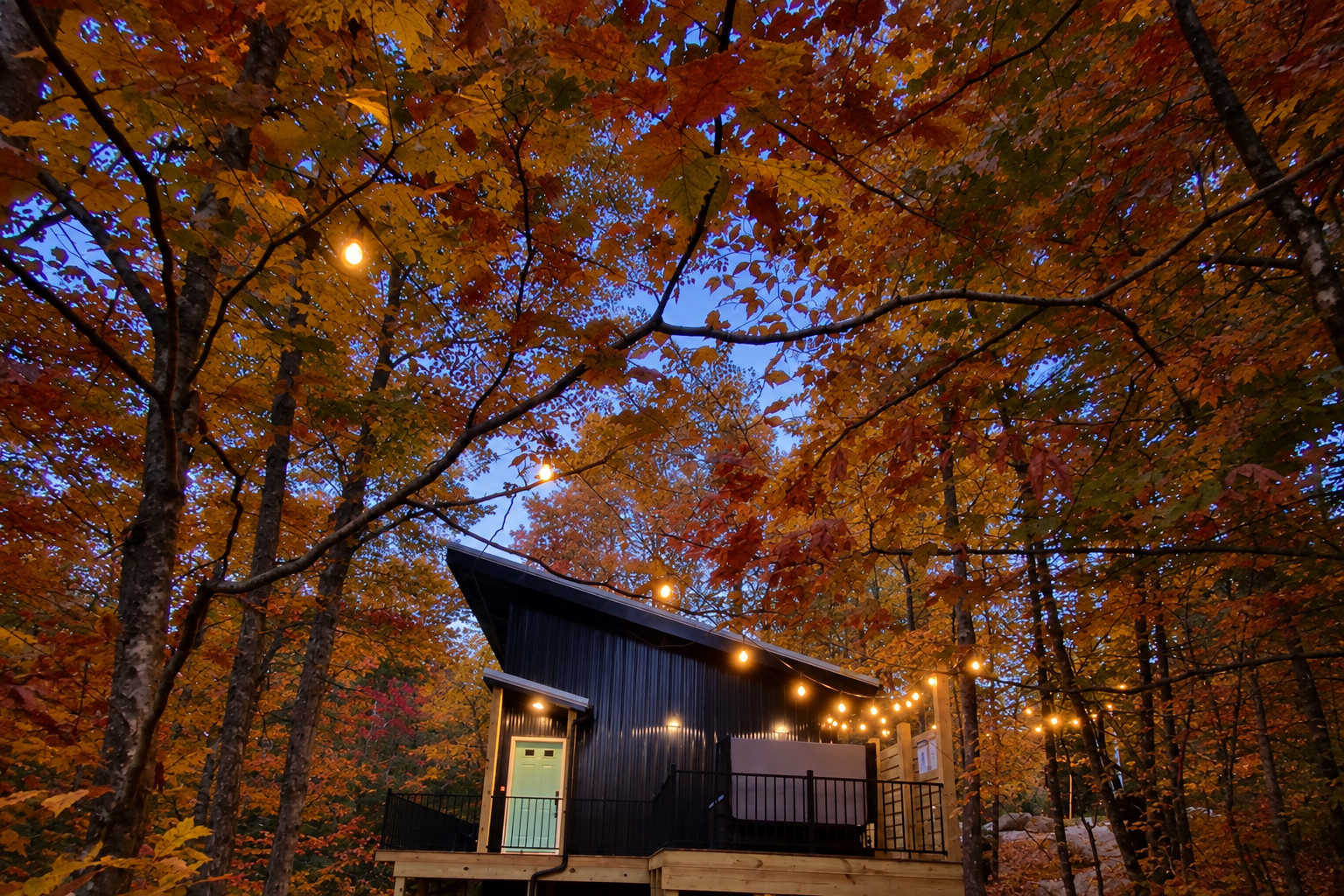
Golden hour at dusk is the second-best window, particularly for cabin decks and overlooks facing west. The light turns the sandstone amber and the foliage almost luminous. Overcast days are underrated: the even, diffused light eliminates harsh shadows and brings out the deep greens and mossy textures that make the Gorge feel ancient.
November is worth calling out specifically. Peak fall color in the Gorge typically runs through mid-November. By early to mid-November, the lower canopy is bare enough that you can see the structure of the forest in ways you cannot in full leaf. The light gets lower and warmer. The trails are quieter. And the remaining color pops harder against bare branches. It is a less obvious time to visit, which is exactly why the photographers who know the Gorge well tend to go then.
Driving the Gorge: Nada Tunnel and the Scenic Route
Not every great photo in the Gorge is on a trail. Nada Tunnel is a hand-carved railroad tunnel that cuts through a ridge and frames the forest on the other side in a near-perfect circle of light. It is a one-lane tunnel, so traffic takes turns, but it is worth pausing to photograph from both directions. The drive through the gorge itself, particularly along the river road, offers spontaneous pull-off moments that do not require any hiking: the river glinting through autumn color, a sandstone cliff face close enough to touch from the road, a hawk on a wire above the treeline.
Where to Stay to Maximize Your Shot List
The best photography locations in the Gorge are spread across a relatively small area. Staying close to the main trailheads means you can be at an overlook before sunrise without a long drive in the dark, which is the difference between getting the fog shot and arriving 20 minutes too late to catch it.
Canopy 7 at Vacation Alchemist is a treetop cabin perched above the forest canopy about 10 minutes from the main Gorge trailheads. The deck faces into the trees at canopy height, which creates natural landscape photography in every direction from the cabin itself. Sunrise from the deck and hot tub shots in fall color are a category of their own. Booking directly through vacationalchemist.com skips the service fees that third-party platforms add, and puts you in direct contact with Skip and Liz, who know the Gorge well enough to tell you exactly where the light is best on the morning you plan to shoot.
Practical Notes for Photographers
A few honest logistics worth knowing before you go.
Muir Valley is a privately owned nature preserve operated by Friends of Muir Valley, a nonprofit. It is free to enter for climbing and hiking, but there is a $15-per-vehicle daily parking fee that funds the preserve’s upkeep. If you plan to shoot the climbing walls, it is worth noting that many of the most dramatic routes are on walls that see morning shade, so afternoon light works better for the stone itself.
Indian Staircase is on a lot of photographers’ lists because the exposed sandstone scramble looks extraordinary in photos. It does. But the trail involves real, exposed scrambling that can be hazardous, particularly when the rock is wet. If you plan to shoot it, bring a friend, wear boots, and be honest with yourself about your scrambling comfort level before you commit to it.
Download offline maps before you go. Cell signal in the Gorge is inconsistent at best, and several of the best trailheads are beyond coverage. Apps like AllTrails work offline if you download the map ahead of time.
Frequently Asked Questions
When is the best time of year to photograph Red River Gorge?
Fall, specifically mid-October through mid-November, offers peak color and dramatic light. Spring wildflower season (April and May) is excellent for trail and waterfall photography. Fog is most reliable in fall and spring mornings.
What is the best time of day to photograph the arches?
It depends on the arch and the season. Generally, mid-morning to early afternoon puts direct light on most arches. Overcast days are ideal for even, shadow-free light on sandstone. Golden hour at dusk works well for overlooks facing west.
Are drones allowed in Red River Gorge?
Much of the Gorge falls within the Daniel Boone National Forest and the Clifty Wilderness. Drone use is restricted or prohibited in wilderness areas. Check current U.S. Forest Service regulations before flying. Some areas outside the wilderness boundary may allow recreational drone use with the right permits.
Is Red River Gorge good for photography in winter?
Winter is underrated for photography in the Gorge. Snow on sandstone cliffs and bare trees with ice on the creek produce striking, minimalist images you cannot get in any other season. Crowds are nearly nonexistent. Trails can be icy, so microspikes are worth packing.
What gear should I bring for photography in the Gorge?
A wide-angle lens for arches and overlooks, a telephoto for wildlife and compressed canyon views, a tripod for waterfall long exposures and low-light fog shots, and a waterproof bag or rain cover for your gear. The Gorge gets wet fast, and sudden rain is part of the deal.