
How to Plan a Red River Gorge Trip

How to Plan a Red River Gorge Trip (The Complete Guide)

Red River Gorge does not look like the rest of America. Sandstone arches jut out over ancient forest. The trails drop into hollows so quiet you forget what year it is. The climbing is world-class. The food is better than it has any right to be. And if you pick the right place to sleep, you will wake up with the forest canopy at eye level and a hot cup of coffee in your hand before you have said a single word to another human being.

Planning the trip well is the difference between a good weekend and one you describe to strangers for years. This guide covers everything: when to go, what to hike, where to eat, what to pack, and how to squeeze every good thing out of a few days in eastern Kentucky.

When Is the Best Time to Visit Red River Gorge?

Red River Gorge is genuinely great in every season, but each one has a personality worth knowing before you book.

Fall (September through November) is the season people mean when they say the Gorge is spectacular. The hardwood canopy turns amber, gold, and deep red, and peak color typically arrives in mid to late October. Weekends fill up fast. If you have flexibility, a Monday through Thursday visit in October gives you the same foliage with a fraction of the trail traffic.

Spring (March through May) brings wildflowers to the forest floor and the return of reliable climbing conditions. Crowds are lighter than fall, temperatures are cool and comfortable for long hikes, and the waterfalls run hard after winter rains. Many locals quietly call spring the best-kept secret in the Gorge.

Summer (June through August) means swimming holes, longer days, and the full lineup of restaurants and outfitters operating. It gets humid. Beat it by starting hikes early and retreating to a shaded hollow or a cold creek by afternoon.

Winter (December through February) is genuinely underrated. The leafless trees open views that disappear the rest of the year. A hot tub in the middle of a snowstorm in the forest is one of those experiences that does not translate in photos but lands hard in person. Crowds are minimal. Weekday rates are often the best of the year.

How to Plan a Red River Gorge Trip: A 3-Day Itinerary

Three days is the sweet spot. Long enough to feel the place, short enough that you leave wanting to come back. Here is how to build the trip.

Day One: Arrive, Orient, and Decompress

Take Nada Tunnel on the way in if you have never driven through it. The single-lane tunnel carved through a sandstone ridge is one of those moments that signals you have arrived somewhere different. It earns the drive.

Keep Day One easy. Check in, walk the property, get your bearings. Save the big hikes for when your legs are fresh. A short walk to a nearby overlook or a creek scramble near the cabins is plenty. The Gorge does not need to be conquered on arrival day.

For dinner, Sky Bridge Station in Slade has gourmet hot dogs, a rotating selection of Kentucky microbrews on tap, and a gear shop if you forgot anything. Red River Rockhouse is another solid option, especially on a night with live music.

End the evening in the hot tub. Let the forest settle around you. The owls start calling after dark. Give it time.

Day Two: The Big Hike

This is the day you put miles on. Pick one long trail and do it right.

Auxier Ridge is the one most people point to when they want the best views in the Gorge. The loop runs roughly six miles and takes you along an exposed ridgeline with sweeping views of the river valley and the surrounding forest. It earns every step. Bring water, wear real shoes, and do not attempt it in wet conditions, the sandstone gets slick.

Gray’s Arch is the other classic. About three and a half miles out and back, with a flat forested start that transitions into a steep approach to one of the most photographed arches in the eastern United States. Go early if you want the arch to yourself.

If you have climbers in the group, Muir Valley is a full day on its own. The preserve is owned and operated by Friends of Muir Valley, a nonprofit, and is free to enter with a $15 per vehicle daily parking fee that funds trail and wall maintenance. Over thirty climbing walls, everything from beginner routes to elite sport climbing. Incredible place.

For lunch after a morning on trail, Thatcher Barbecue Company in Slade is a local favorite for a reason. La Cabaña is worth the visit for tacos and margaritas when you want something different. Miguel’s Pizza on Natural Bridge Road has been feeding climbers since 1984 and has earned its reputation.

Back at the cabin by late afternoon. Hot tub. Fire pit. Do nothing intentionally for at least ninety minutes.

Day Three: Go Slower on Purpose

The best trips have a slow morning built in before the drive home. Coffee on the deck. No agenda for the first two hours. The forest does a lot of the work if you let it.

For a shorter, high-reward hike before checkout, Whittleton Arch is about two and a half miles round trip along a gentle creek-side path. It is quieter than the marquee trails and rewards you with a graceful arch at the end without destroying your legs before a long drive.

The Rock Bridge Loop is another excellent short option. Roughly a mile and a half, it passes Creation Falls and ends at the only arch in the Gorge with a stream running directly underneath it. Both are perfect for families or anyone who wants beauty without brutality.

If you have an extra hour before leaving, the Gorge Underground offers guided kayak and paddleboard tours through a flooded abandoned limestone mine in Slade. Glass-bottom kayaks, neon lighting, and an hour underground that feels genuinely unlike anything else. Reserve ahead in busy season.

For a final meal, the 145 Roadhouse in Campton does bourbon burgers, catfish, smoked meats, and fried pickles with live music on weekends. A fitting send-off.

Where to Stay in Red River Gorge

The lodging you choose shapes the entire trip. There is a meaningful difference between a cabin that happens to be near the Gorge and one that is genuinely part of the experience.

Canopy 7 and Canopy 9 at Vacation Alchemist sit in the treetops in Rogers, Kentucky, about ten minutes from the main trailheads. Each cabin has its own private hot tub, private fire pit, and private deck suspended in the forest canopy. They are not shared. Canopy 7 is built for early risers and the kind of people who set an alarm for sunrise. Canopy 9 brings mid-century modern design into the woods for the guests who care as much about how a room looks as how it feels. Skip and Liz stock both cabins with the things you forgot to pack and answer trail questions at 11pm. That part is not a promise, it is just what they do.

What to Pack for Red River Gorge

The Gorge punishes under-preparation on the trail and rewards it in the hot tub. Here is what actually matters.

On the trail: hiking boots or trail shoes with real grip (the sandstone is beautiful until it is wet and then it is treacherous), at least two liters of water per person per day, a headlamp even on day hikes (it gets dark fast in the hollows), and a basic first aid kit. Trekking poles are optional but earn their weight on steep descents.

For the cabin: layers. Morning and evening temperatures drop significantly in fall and winter. A good fleece or hoodie is the single item most guests wish they had packed more of. Bring a book, a record to play on the Victrola, and the actual willingness to put your phone down for a few hours. The Gorge is better when you let it be the whole experience.

What to leave home: ambitions that are too big for the time you have. Pick fewer things and do them fully. The guests who try to hit every trail in three days end every day exhausted and miss the part where the trip actually happens.

A Few Things Worth Knowing Before You Go

Cell service is limited in parts of the Gorge. Download your maps offline before you leave the cabin. AllTrails works well for this, and the trail data for the Gorge is solid.

Many restaurants in the area keep seasonal hours and the lineup changes. Check directly with any spot you are planning around before you build an evening on it. The local food scene is genuinely strong and has more range than most visitors expect.

The Natural Bridge State Resort Park is worth at least one visit. The sandstone arch spans roughly seventy-eight feet and stands about sixty-five feet high. The Original Trail is a short, steady climb to reach it. A seasonal Sky Lift also runs from approximately April through November for those who want the view without the vertical.

Wildlife is real and present. White-tailed deer, wild turkey, owls, and the occasional black bear are part of the ecosystem here. Enjoy them from a distance, store food securely, and do not leave anything scented outside overnight. The forest is theirs first.

Frequently Asked Questions

How far is Red River Gorge from Lexington, Kentucky?

Red River Gorge is roughly one to one and a quarter hours southeast of Lexington via the Mountain Parkway. It is an easy drive and the last stretch through the Gorge itself is part of the experience.

What is the best hike in Red River Gorge for first-time visitors?

Auxier Ridge offers the most rewarding combination of scenery and trail character for first-timers who are reasonably fit. For families or shorter outings, the Rock Bridge Loop and Whittleton Arch are excellent options with significant natural payoffs and manageable distances.

Is Red River Gorge good for rock climbing?

Red River Gorge is one of the premier sport climbing destinations in the United States, with hundreds of established routes across a wide range of difficulty. Muir Valley, a nature preserve managed by Friends of Muir Valley, is free to climb with a $15 daily parking fee and is widely considered the heart of the climbing experience in the Gorge.

When does fall foliage peak in Red River Gorge?

Peak fall color in Red River Gorge typically arrives in mid to late October, though it shifts slightly year to year depending on temperatures. The hardwood canopy turns gold, amber, and deep red. October weekends fill up quickly with both hikers and leaf-peepers, so booking accommodations early is worth doing.

What is Gorge Underground?

Gorge Underground is a guided kayak and paddleboard tour through a flooded abandoned limestone mine in Slade, Kentucky. Tours run roughly an hour and include glass-bottom kayak and neon-lit options. It is one of the more genuinely unusual experiences in the region and is best reserved in advance during busy seasons.
How to Plan a Red River Gorge Trip

How to Plan a Red River Gorge Trip

How to Plan a Red River Gorge Trip (The Honest Local Guide)

The Red River Gorge keeps getting discovered. Named one of America’s most underrated destinations, it has been pulling in hikers, climbers, and anyone who has ever looked at a photo of fog sitting in a sandstone canyon and felt something. If you are planning your first trip, or trying to stop wasting days figuring it out on the fly, this guide will help you do it right.

We are Skip and Liz Wolfe. We built two treetop cabins here in Rogers, Kentucky, and we have spent years learning the Gorge trail by trail, plate by plate. This is the guide we wish existed when we arrived.

How Long Do You Need for a Red River Gorge Trip?

A weekend (Friday evening through Sunday) gives you enough time to hit the highlights without feeling rushed. Three nights is the sweet spot most guests land on. Four nights or more lets you slow down, repeat a favorite trail in different light, and actually unwind instead of just checking boxes.

If you only have one full day, pick one arch, one restaurant, and one sunset. Do not try to do everything. The Gorge rewards people who linger.

When Is the Best Time to Visit Red River Gorge?

Every season has a real argument for it.

Fall (mid-September through early November) is peak season for good reason. The hardwood canopy turns gold, orange, and red across the canyon walls. Temperatures are ideal for hiking, the crowds thin out on weekdays, and the light does extraordinary things in the afternoon. Book early; fall weekends fill up fast.

Spring (March through May) brings wildflowers, waterfalls running full, and a freshness in the air that is hard to describe and easy to feel. Trillium and Virginia bluebells line the creek trails. Climbing season opens back up and the walls fill with visitors from across the country.

Summer means swimming holes, full canopy shade on the trails, and some of the best stargazing you will find anywhere in Kentucky. Humidity is real, so start hikes early and plan around it.

Winter is the secret season. Snow on the sandstone looks like something from a film set. The trails are nearly empty. Sitting in a hot tub while the bare forest stretches out below you is a specific kind of quiet that is hard to find anywhere else.

Where to Stay at Red River Gorge

Options range from primitive camping to lodge rooms to private cabin rentals. If you want the full experience, a private cabin puts you in the trees rather than looking at them through a parking lot. Our two treetop cabins, Canopy 7 and Canopy 9, sit in Rogers, Kentucky, about 10 minutes from the main trailheads. Each has its own private hot tub, private fire pit, and a deck that hangs out over the forest canopy. Canopy 7 is adventure-forward and perched high for early risers and star chasers. Canopy 9 leans mid-century modern for design-conscious travelers and couples celebrating something worth celebrating.

When you are ready to lock in your dates, you can browse both cabins and book directly at Vacation Alchemist. Booking direct means you are dealing with us, not a platform, which matters when you text at 11pm asking which arch is worth the detour.

The Best Trails in Red River Gorge (By Ability Level)

Red River Gorge sits inside the Daniel Boone National Forest and holds the highest concentration of natural sandstone arches east of the Rocky Mountains. There is no shortage of trails, and the quality is consistently high. Here is an honest breakdown by difficulty.

Easy Trails (Great for Families and First-Timers)

Natural Bridge (Original Trail) is the classic for a reason. It is a short, steady climb to the main 78-foot sandstone arch, roughly 65 feet high. If hiking is not in the cards, a seasonal Sky Lift (running approximately April through November) takes you up in about 11 minutes. Either way, the arch is worth it.

Rock Bridge Loop is about 1.5 miles and passes both Creation Falls and Rock Bridge, the only arch in the Gorge with a stream running beneath it. This one tends to fly under the radar and it probably should not.

Whittleton Arch is roughly 2.6 miles round trip, mostly gentle creek-side walking, with a rewarding arch at the end. Quieter than the marquee trails, especially on weekend mornings when everywhere else has a full parking lot.

Moderate Trails (Some Elevation, Worth the Effort)

Gray’s Arch runs about 3.4 miles out and back, with the forest staying flat for a while before a steeper push near the arch itself. The arch is massive. Bring water and expect some company on weekends.

Auxier Ridge to Courthouse Rock and Double Arch is one of the best full-day hikes in the Gorge. The loop runs roughly 6 miles with some of the most exposed ridgeline views you will find east of the Rockies. Not for people who are uncomfortable with height, and worth every step for people who are not.

Princess Arch is a shorter hike (under 2 miles) with a high payoff and a great choice when your legs are tired or your window is short.

Hard Trails (Experience Required)

Indian Staircase is about 2.9 miles but involves real, exposed sandstone scrambling. It is genuinely fun for experienced hikers and genuinely dangerous for people who underestimate it. Go with someone who has done it before, wear shoes with grip, and do not bring kids who are not strong climbers.

Rough Trail earns its name. Steep, rugged, rocky. Beautiful. Go prepared.

Across all trails: bring more water than you think you need, wear real shoes (not sandals on any scramble), and check trail conditions before you go. The Gorge is not a manicured park; the terrain is real and it asks a little respect in return.

Climbing at Red River Gorge

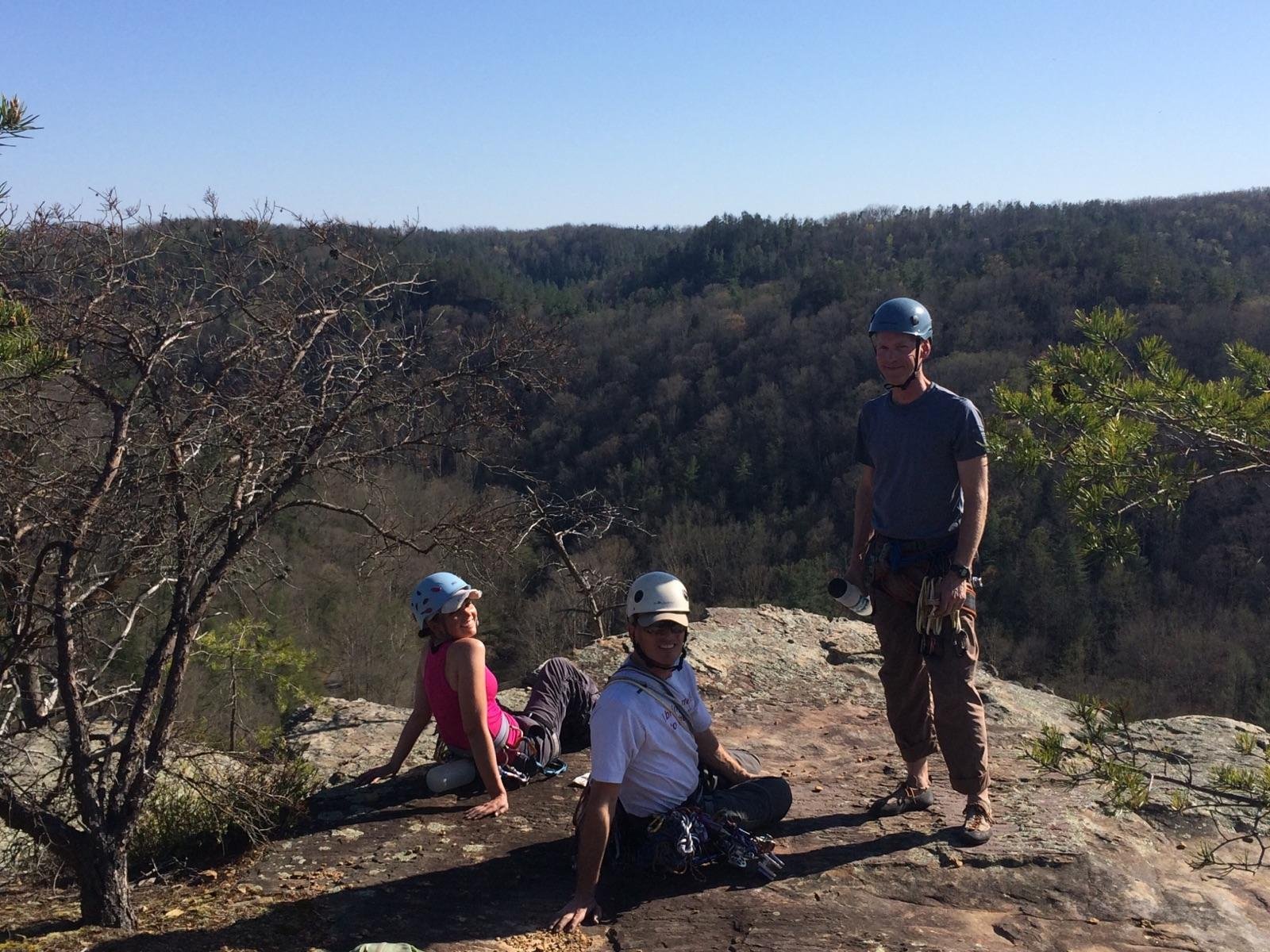
RRG is one of the premier sport-climbing destinations in the country, and if you climb at all, you already know this. Muir Valley is a privately owned nature preserve managed by the nonprofit Friends of Muir Valley. It is free to climb but charges a $15-per-vehicle daily parking fee that funds trail and wall maintenance. There are more than 30 walls and the quality of the routes is consistently excellent. Arrive early on weekends. Muir Valley memberships and volunteer days can earn an annual parking pass.

The larger Gorge area has dozens of additional walls across both public and private land. Sky Bridge Station, which serves as a restaurant, tap house, and gear shop all in one, is a good local resource for beta on current conditions.

Where to Eat Near Red River Gorge

This is the part most trip-planning guides skip, and it matters. The Gorge area has a genuinely good food scene. A few worth building a meal around:

Miguel’s Pizza in Slade has been feeding climbers since 1984. Made-to-order pizza, a campground out back, and a steady line out the door on weekends for good reason. Do not skip it if you have not been.

Thatcher Barbecue Company in Slade opened in 2021 and has built a loyal following fast. Downhome barbecue done right.

Sky Bridge Station serves gourmet hot dogs and quesadillas alongside about 12 Kentucky microbrews on tap. It is a great mid-day stop that doubles as a gear shop if you forgot something.

145 Roadhouse in Campton is the move for a sit-down dinner with bourbon burgers, catfish, steaks, smoked meats, and live music on weekends. Plan for it on a Friday or Saturday night.

La Cabaña serves authentic Mexican, tacos, burritos, and margaritas, and it hits the spot after a long day on the trail.

Most spots keep seasonal hours and things change, so check directly before you go. The area also has a general store in Slade with camping essentials, ice cream, and fudge, which covers most of your between-meal needs.

Beyond the Trails: Other Things to Do

Gorge Underground runs guided kayak and paddleboard tours through a flooded abandoned limestone mine in Slade. The glass-bottom and neon-lit kayak options are genuinely surprising. Tours run about an hour and fill up fast in busy season, so reserve ahead.

The Red River has calmer stretches that are well-suited for tubing and family-friendly paddling.

Mushroom Grove Shopping Village is a boardwalk of about 14 shops near the Gorge with boutique clothing, outdoor gear, handmade gifts, ice cream, and a gem-mining attraction for kids. Worth an hour of browsing on a slow afternoon.

Stargazing from a private deck on a clear night is its own activity. The light pollution out here is low enough that the Milky Way is not a special occasion. It is just what Tuesday looks like.

A Sample Red River Gorge Itinerary (3 Nights)

Day 1 (Arrival Day): Get in, get settled, and do not over-schedule. Drive the Gorge loop, stop at one overlook, and pick up dinner or groceries in Slade. Fire pit and hot tub in the evening. The trip starts when you stop trying to optimize it.

Day 2 (Full Day): Early start on a trail that matches your ability level. Gray’s Arch or Auxier Ridge if you are comfortable with mileage. Natural Bridge or Rock Bridge Loop if you want something shorter. Lunch at one of the local spots in Slade. Afternoon visit to Muir Valley if you climb, or the Red River if you do not. Dinner at 145 Roadhouse or Sky Bridge Station.

Day 3 (Second Full Day): Hit a trail you skipped on day 2, or return to a favorite in different light. Late morning works well on trails that were crowded the day before. Try Gorge Underground if you have not booked a tour. Afternoon at your own pace. Hot tub at dusk.

Day 4 (Departure Day): Coffee on the deck before checkout. One last look at the canopy. Drive home slowly and take the scenic route.

What to Pack for Red River Gorge

The basics: real hiking shoes or trail runners (not sneakers on scramble routes), layers for temperature swings (especially in fall and spring), more water than you plan to drink, a headlamp if you are hiking later in the day, and a light rain layer because the weather in the Gorge changes fast and often. Trekking poles are genuinely useful on steep descents.

Cell service is limited in parts of the Gorge. Download the trail maps you need before you go. AllTrails has good coverage of the main routes.

Frequently Asked Questions

How far is Red River Gorge from Lexington?

Red River Gorge is roughly 1 to 1.25 hours southeast of Lexington, Kentucky, in the Daniel Boone National Forest. It is an easy drive from much of the region and a straightforward road trip from Cincinnati, Louisville, and beyond.

Is Red River Gorge good for beginners?

Yes. Trails like Natural Bridge, Rock Bridge Loop, and Whittleton Arch are well-suited for first-time hikers or families with kids. Just match your trail choice honestly to your fitness level. The Gorge has easy options and genuinely hard ones; check difficulty ratings before you go.

Do I need a permit to hike at Red River Gorge?

Most trails in the Daniel Boone National Forest do not require a permit. Muir Valley charges a $15-per-vehicle daily parking fee, but climbing access itself is free. Always check current conditions and any fee updates with the relevant land manager before your trip.

When does fall foliage peak at Red River Gorge?

Peak fall color in the Red River Gorge area typically runs from mid-October through early November, though it varies year to year depending on temperatures and rainfall. Mid-to-late October tends to be the most reliable window for peak color. Fall weekends book out well in advance.

Can I bring kids to Red River Gorge?

Absolutely. Natural Bridge, Rock Bridge Loop, and Whittleton Arch are all family-friendly, and the Sky Lift at Natural Bridge State Resort Park is a great option for younger kids who are not ready for the climb. The Red River offers calm water for tubing and wading. Mushroom Grove has a gem-mining attraction kids tend to love. Just stick to the easy-rated trails and avoid scramble routes with young children.