
Red River Gorge is not just a great place to climb. It is widely considered one of the finest sport climbing destinations in the world, full stop. The unique sandstone geology, the density of developed routes across every grade, and the raw beauty of the Daniel Boone National Forest combine to create a climbing environment that draws athletes from every corner of the globe. Whether you have been climbing for twenty years or you just bought your first harness, the Gorge has a wall with your name on it.
This guide covers everything: why the Gorge earned its global reputation, where to climb, how to plan your trip, and how to make the most of your time in eastern Kentucky.
Why Is Red River Gorge Rock Climbing World-Famous?
Red River Gorge sits in the Daniel Boone National Forest in eastern Kentucky, roughly one to one and a quarter hours southeast of Lexington. The Gorge has the highest concentration of natural arches east of the Rocky Mountains, and the same geology that carved those arches created thousands of featured sandstone cliffs ideal for sport climbing. Steep pocketed faces, long overhanging routes, and bullet-hard stone are the signature here. Routes range from beginner-friendly 5.6s to elite 5.14s that have hosted some of the most memorable ascents in American climbing history.
The numbers make the case clearly. The Gorge has hundreds of established routes across dozens of crags. Many of the most celebrated sport climbs in the United States are here. For decades, elite climbers have made the pilgrimage to push their limits on the Gorge’s steep, sustained lines, and the community that has grown up around those climbs gives the area an energy unlike any other crag in the country.
Red River Gorge was recently named America’s most underrated camping and outdoor destination based on aggregated data from Instagram, TikTok, and AllTrails, earning the highest overall score in the study. The climbing community has known this for generations. The rest of the world is catching on fast.
Where to Climb in Red River Gorge
The Gorge is large and the climbing is spread across many distinct areas. Here is a practical breakdown of the main destinations and what to expect at each.
Muir Valley
Muir Valley is the crown jewel of Red River Gorge climbing and one of the most beloved climbing preserves in the United States. The land was gifted to the nonprofit Friends of Muir Valley, which now owns and operates the property as a 501(c)(3). It is free to climb here, but there is a $15-per-vehicle daily parking fee that funds trail maintenance, bolting, and stewardship. If you plan to visit often, a membership or volunteer hours can earn you an annual parking pass.
The preserve features more than thirty walls spanning every style: tall steep faces, cave climbs with enormous roofs, and long sustained moderates that build endurance and skill. The access is well-maintained, the bolting is excellent, and the community that shows up here on any given weekend is about as passionate a group of climbers as you will find anywhere. Plan to arrive early on fall weekends. The parking lot fills up, and the most popular walls get crowded by mid-morning.
Miguel’s Pizza and the Surrounding Crags
No guide to Red River Gorge climbing is complete without mentioning Miguel’s Pizza on Natural Bridge Road in Slade. This institution has been feeding climbers since 1984, and it functions as the informal base camp and community hub for the entire Gorge. The campground out back has hosted generations of climbers who rolled in with a tarp and a rack and left with their grade bumped up and a few new friends. The pizza is legitimately good. The community bulletin board is a living document of local beta. It is not optional.
The crags nearest to Slade, including areas around the Natural Bridge corridor, offer some of the most accessible climbing in the Gorge, with routes close to the road and well-worn approach trails.
The Military Wall, Pebble Beach, and Beyond
Climbers who have been coming to the Gorge for years develop their own circuit of favorites. The Military Wall is known for its high-quality moderate routes that build real technique. Pebble Beach is a bouldering destination as well as a sport crag. Torrent Falls, Clear Creek, and Long Wall are other names that come up constantly in beta conversations. The honest answer is that there are more good crags here than you can visit in a week, possibly in a month. That is what keeps people coming back.
Red River Gorge Rock Climbing by Skill Level
One of the Gorge’s greatest strengths is the range it offers. Here is a rough guide to what to expect depending on where you are in your climbing journey.
Beginner (5.5 to 5.9)
Beginners will find welcoming walls throughout the Gorge, particularly at areas with well-bolted moderate routes close to the trailheads. Muir Valley and the crags near Slade both have beginner-appropriate lines, though the exposure and steep sandstone can feel committing even at lower grades. If you are brand new to outdoor climbing, consider hiring a local guide service for your first day or two. The technique that works in a gym transfers differently to featured sandstone.
Intermediate (5.10 to 5.11)
This is where the Gorge really opens up. There are hundreds of exceptional routes in this range, spread across nearly every major crag. You will get to experience the Gorge’s signature steep, pocket-pulling style and understand why people rearrange their entire year around a trip here.
Advanced (5.12 and above)
The Gorge has hosted some of the hardest and most celebrated routes in American sport climbing history. If you are projecting at this level, you already know the names. What you may not fully appreciate until you arrive is the sheer volume of elite-grade climbing available. Multiple world-class crags within a short drive of each other, all with strong beta communities and excellent conditions.
When to Go: Best Seasons for Climbing in the Gorge
Red River Gorge climbing conditions change meaningfully with the seasons, and timing your trip right makes a significant difference.
Spring (March through May) brings wildflowers to the forest floor and cool, friction-friendly temperatures. Conditions can be wet, especially early in the season, so check forecasts and plan on some flexibility. The Gorge wakes up fast once temperatures stabilize, and spring weekends fill up quickly.
Summer (June through August) is warm and humid, which affects friction on steep routes. Early mornings and shaded north-facing walls are your friends in July and August. The forest is fully green, the waterfalls are running, and the landscape has a lushness that photographs strikingly. If you can handle the heat, the Gorge in summer has a character all its own.
Fall (September through November) is peak season for a reason. Temperatures drop into the ideal range, the humidity breaks, and the sandstone grips like velcro. The foliage, particularly in October, turns the entire canyon into a spectacle that requires no filter and no embellishment. This is the window most climbers target, and it is as good as advertised. October weekends in particular book cabins and campgrounds months in advance.
Winter (December through February) is the Gorge’s best-kept secret. Crowds thin dramatically, the caves and overhanging walls stay dry even in rain, and the steel-grey forest has a moody atmosphere that inspires a different kind of climbing trip. If you are chasing hard projects on steep routes, winter at the Gorge is genuinely worth considering.
What to Know Before You Go
Leave No Trace and Access
The Gorge has a passionate local stewardship community, and access to private preserves like Muir Valley depends entirely on climbers behaving well. Pack out everything you pack in. Stay on established trails. Respect posted closures, particularly during raptor nesting season in spring. The access we all enjoy was earned through years of good stewardship. Protect it.
Sandstone Conditions
Sandstone is porous and significantly weaker when wet. Climbing on wet sandstone damages the rock and shortens the lifespan of holds. Wait at least a full day, preferably two, after significant rain before climbing outdoors at the Gorge. The community norm is firm on this point, and for good reason.
Navigation and Cell Service
Cell service in the Gorge is limited in many areas. Download offline maps before you go. The Mountain Project app and the Red River Gorge guidebook (available locally) are both worth having. Know your approach trail before you leave the parking lot.
Where to Eat After a Big Day
The Gorge has a genuinely excellent food scene for a rural area. Beyond Miguel’s, Sky Bridge Station runs a tap house with around twelve Kentucky microbrews on draft alongside gourmet hot dogs and quesadillas. Thatcher Barbecue Company in Slade has been drawing loyal regulars since it opened. Red Point BBQ is a local favorite for post-climb recovery eating. La Cabaña serves authentic Mexican with real margaritas. 145 Roadhouse in Campton does bourbon burgers and smoked meats with live music on weekends. You will not go hungry.
Where to Stay Near the Climbing
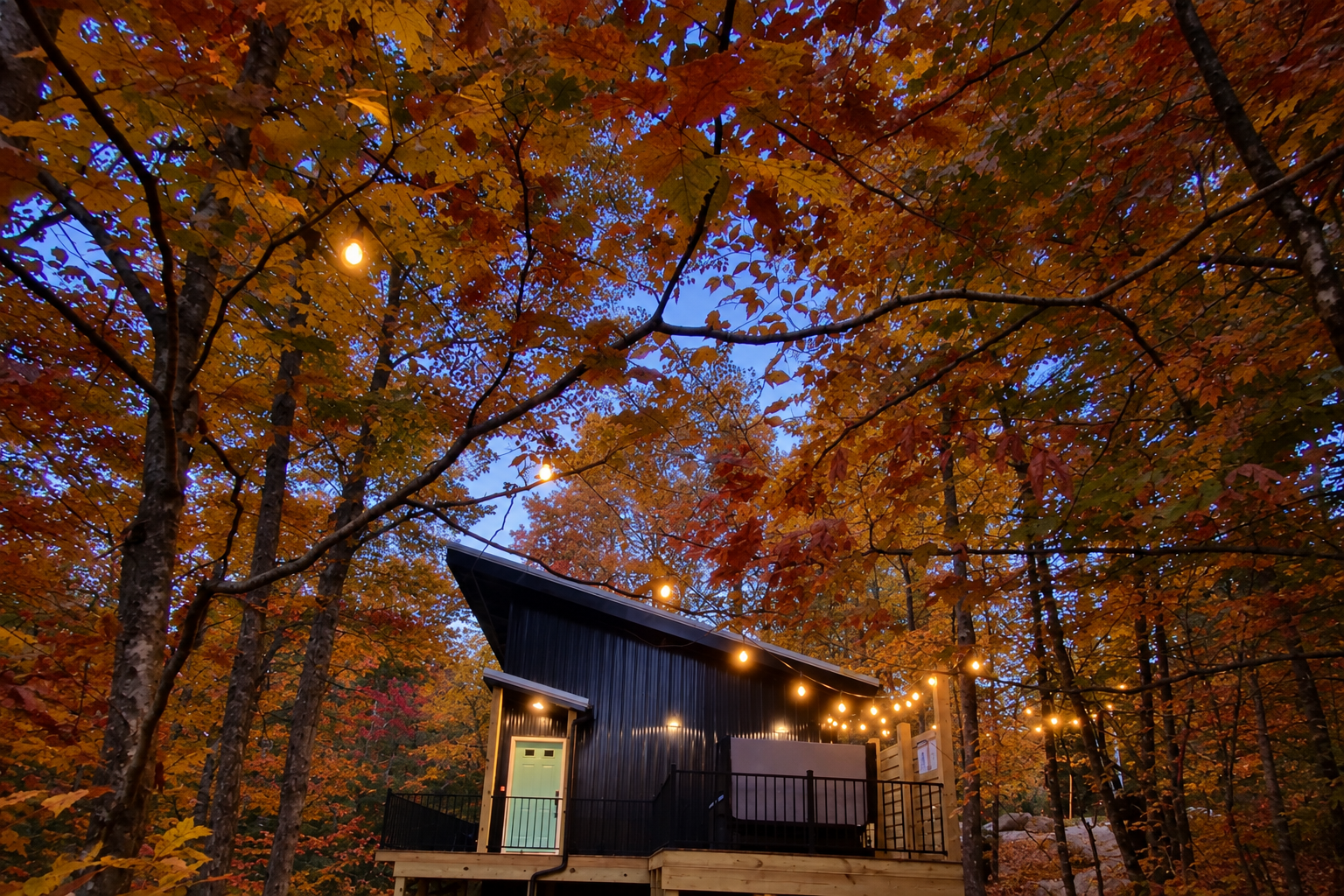
Camping is the classic Gorge experience, and the campgrounds near Miguel’s have a community feel that is part of the tradition. But if you want to wake up in the forest canopy with a hot tub and a real bed waiting after a long day on the wall, Vacation Alchemist’s two luxury treetop cabins sit about ten minutes from the main Gorge trailheads in Rogers, Kentucky.
Canopy 7 and Canopy 9 each have a private hot tub, a private fire pit, and a deck perched into the forest canopy. After a full day of climbing, those are not small things. Skip and Liz know the Gorge well and are genuinely the kind of hosts who will text you trail and crag beta at 11pm if you need it.
Booking directly through vacationalchemist.com skips the service fees that third-party platforms add and puts you in direct contact with the hosts who actually live near the Gorge and know it well. It is the simpler, friendlier way to book.
Frequently Asked Questions
Is Red River Gorge good for beginner rock climbers?
Yes, the Gorge has routes across every skill level, including beginner-appropriate lines at multiple crags. First-time outdoor climbers may find the transition from gym to sandstone requires some adjustment, so a local guide service on your first day is a worthwhile investment.
Is Muir Valley free to climb?
Climbing at Muir Valley is free, but there is a $15-per-vehicle daily parking fee that funds the preserve’s upkeep. The property is owned and operated by the nonprofit Friends of Muir Valley. Membership or volunteer hours can earn an annual parking pass.
When is the best time of year to climb at Red River Gorge?
Fall, specifically September through November, offers the best combination of cool temperatures, low humidity, and ideal friction. Spring is also excellent. Winter is an underrated option for steep, overhanging routes in the caves. Summer is warm and humid but manageable on shaded walls in the early morning.
How many climbing routes does Red River Gorge have?
The Gorge has hundreds of established sport climbing routes across dozens of crags, ranging from beginner grades through elite 5.14s. The density of high-quality routes is one of the primary reasons it is considered a world-class destination.
Can you climb at Red River Gorge after rain?
No. Sandstone is porous and significantly weaker when wet. The community standard is to wait at least one full day, preferably two, after meaningful rainfall before climbing on outdoor sandstone at the Gorge. Climbing on wet rock causes permanent damage to holds.