
Stargazing in Red River Gorge: Best Spots & Tips

Stargazing in Red River Gorge: Where the Sky Finally Has Room to Breathe

You drive into the Gorge and something changes before you even park. The road narrows. The trees close in. And somewhere around mile marker three, your phone signal goes from two bars to none. You do not panic. You breathe. And that night, when you walk out onto the deck and tip your head back, you remember what the sky is actually supposed to look like.

Stargazing in Red River Gorge is one of those experiences that sounds simple until it happens to you. The Daniel Boone National Forest surrounds you on every side. The nearest city with serious light pollution is Lexington, more than an hour away. The ridgelines cut clean silhouettes against the dark. And on a clear night, the Milky Way does exactly what it promises.

Here is everything you need to know to make the most of a night sky in the Gorge.

Why Is Red River Gorge Good for Stargazing?

Red River Gorge sits inside the Daniel Boone National Forest in eastern Kentucky, far enough from Louisville and Lexington that artificial light does not wash out the sky. The combination of low population density, forested ridgelines, and minimal commercial development makes it one of the darkest accessible sky zones in the state. On nights with no moon and low humidity, the Milky Way is clearly visible to the naked eye. That is not a marketing claim. It is geography.

The terrain also helps. Deep hollows and creek valleys block any ambient glow from nearby towns. When you are standing on an exposed ridgeline or sitting in a hot tub perched above the canopy, your horizon is clean in nearly every direction.

When Is the Best Time to Stargaze at Red River Gorge?

The short answer: any clear night between late September and early April, when humidity drops and the air gets crisp. Summer works too, but humidity and haze can soften the view. Fall is the sweet spot. The air is sharp, the leaves are thinning, and the sky opens up in a way that July simply cannot match.

A few practical timing notes worth knowing.

New moon nights give you the darkest sky. Check a lunar calendar before you go and plan your trip around a new moon window if deep-sky viewing is your priority. The nights within four or five days of a new moon on either side are nearly as good.

Moonrise timing matters, too. Even a half moon is bright enough to wash out the fainter stars and most of the Milky Way core. On nights when the moon rises after midnight, you get a solid two-hour window of genuine darkness before it climbs high enough to cause trouble. Apps like Stellarium and PhotoPills show moonrise and moonset times for your exact location.

October and November are the two best months in the Gorge for stargazing. The Orionid meteor shower peaks around October 21 to 22 each year, often producing 10 to 20 visible meteors per hour under a dark sky. The Leonids follow in mid-November. You do not need a telescope for either. You need a reclining chair, a warm layer, and patience.

Best Spots for Stargazing in Red River Gorge

Different spots offer different tradeoffs between accessibility, horizon exposure, and crowd levels. Here are the ones worth knowing.

Auxier Ridge

This is the single best exposed ridgeline in the Gorge for a wide-open sky. The Auxier Ridge trail runs roughly six miles round trip with some climbing involved, and the payoff at the end is a narrow sandstone ridge with 270-degree views. During the day it is one of the most photographed viewpoints in Kentucky. At night, with no artificial light in any direction, it is something else entirely. Plan to hike in before dark, set up on the ridge, and hike out by headlamp. Bring more layers than you think you need. Ridge wind at night in October is cold.

Chimney Top Rock

A shorter hike than Auxier Ridge with a similarly exposed summit. Chimney Top sits above the main valley and offers a broad sky overhead. It is more accessible for people who want the dark-sky experience without a six-mile commitment. The trail has some steep sections, so headlamps on the way down are non-negotiable.

Natural Bridge State Resort Park

The broad sandstone arch at Natural Bridge sits at the top of a short climb and provides a clear overhead sky that feels genuinely theatrical. The arch itself frames a rectangle of stars above you. During the day the park is busy. On a Tuesday night in November, you may have it to yourself.

Your Cabin Deck

Here is the one most people underestimate. If you are staying in a treetop cabin perched above the forest floor, you already have a private observatory. The canopy deck at Canopy 7, for example, sits high enough that you are looking out over the treetops rather than up through them. A private hot tub that faces the open sky means you can soak in 104-degree water while the stars wheel overhead. That is not roughing it. That is doing it right.

You do not have to hike anywhere in the dark. You do not have to share the view. And when the Orionids peak at 2am, you are already there, already warm, already looking up.

If that sounds like the right way to spend a fall night in the Gorge, you can reserve your cabin at Vacation Alchemist here and start planning the trip around the next new moon.

What to Bring for a Night Sky Session

Stargazing sounds low-gear until you are actually doing it. These are the things that separate a memorable night from a cold, miserable one.

A red headlamp is the most useful piece of gear you can own for this. White light destroys your night vision in seconds; your eyes need 20 to 30 minutes to fully dark-adapt, and one bright phone screen resets the clock. Red light preserves your adaptation while still letting you move safely. Most outdoor retailers carry them for under $30.

Layers, then more layers. Temperatures in the Gorge drop fast after sunset, especially on ridge trails and exposed rock. In October, nights in the 40s are common. In November, the 30s. A base layer, a fleece, and a wind-resistant shell will keep you comfortable for hours. Bring a hat even if the afternoon felt warm.

A lightweight reclining camp chair or a foam sit pad makes a real difference over the course of an hour of sky-watching. Craning your neck upward gets old after ten minutes. Lying back on a rock does not.

A free app like Stellarium, SkySafari, or Google Sky Map turns your phone into a real-time star chart. Point it at a bright object and it tells you what you are looking at. Just dim the screen to its lowest setting and use night mode if available.

Water and a snack. Obvious, but easy to skip when you are rushing to hit the trail before dark.

What You Can Actually See

Under a genuinely dark sky, the list gets long fast. Here is a rough guide organized by naked-eye visibility.

The Milky Way core is visible from the Gorge on clear, moonless nights from roughly late spring through early winter. In October and November it appears as a wide, hazy band running from the southwest to the northeast, with the brightest section near Sagittarius low in the early evening sky. By midnight in November, Perseus is nearly overhead and the galactic plane stretches from horizon to horizon.

Orion rises in the east in late fall and is fully up by 10pm in November. The three belt stars and the fuzzy patch of the Orion Nebula below them are naked-eye objects under a dark sky. Through binoculars the nebula becomes a genuine cloud of gas with visible structure.

Jupiter and Saturn are visible most years in the fall sky. Both are bright enough to be obvious without any equipment, and even a cheap pair of 10×42 binoculars will show Jupiter’s four Galilean moons as tiny dots lined up on either side of the planet.

Meteors are the crowd-pleaser. A standard clear night produces several random meteors per hour. During the Orionid peak (around October 20 to 22), you can see a meteor every few minutes from a truly dark site. Give yourself at least an hour. The first fifteen minutes are almost always slow; the pace picks up as your eyes adapt and as the radiant point climbs higher.

A Few Honest Notes Before You Go

Ridge trails in the dark are not casual. Even trails you have done in daylight feel different at night. Bring two headlamps per person in case one fails. Tell someone where you are going and when you expect to be back. The Indian Staircase and other scramble routes are a hard no for nighttime navigation unless you are very experienced. Stick to the wide ridge paths like Auxier and Chimney Top for after-dark hiking.

Weather in eastern Kentucky changes quickly in fall. A clear forecast at 6pm can become a cloud deck by 10pm. Check hourly forecasts, not just the daily summary. The Clear Outside app is built specifically for astronomers and shows cloud cover by altitude layer, which is genuinely more useful than a standard weather app for this purpose.

Wildlife is active at night in the Gorge. Barred owls and great horned owls are common night sounds, and if you are quiet on a trail you may hear far more than you see. Bears, deer, and raccoons are all around. Make noise on the trail, keep food in your car or a bear canister, and enjoy the fact that you are walking through a real ecosystem, not a park.

Frequently Asked Questions

Is Red River Gorge a dark sky area?

Red River Gorge is not officially designated as an International Dark Sky Park, but it sits deep inside the Daniel Boone National Forest in eastern Kentucky, far enough from major cities to offer genuinely dark skies on clear nights. The Milky Way is visible to the naked eye under good conditions, making it one of the better sky-watching locations accessible from Lexington or Cincinnati within a 90-minute drive.

What is the best time of year to stargaze at Red River Gorge?

Fall and early winter offer the best combination of dark skies, low humidity, and clear air. October is the peak window, both for the Orionid meteor shower (peaking around October 21 to 22) and for comfortable temperatures that allow for extended outdoor sessions without the summer haze.

Do I need a telescope to stargaze at Red River Gorge?

No. The naked eye is enough to see the Milky Way, major constellations, bright planets, and meteors during a shower. A pair of 7x to 10x binoculars adds a lot for objects like Jupiter’s moons and the Orion Nebula, but they are not required for a great night under a dark sky.

What is the Orionid meteor shower and can I see it from the Gorge?

The Orionids are an annual meteor shower that peaks around October 21 to 22, produced by debris left behind by Halley’s Comet. Under a dark sky you can expect 10 to 25 meteors per hour at peak. The radiant point (the spot in the sky they appear to come from) is near the constellation Orion, which rises in the east after 9pm in late October. The Gorge is an excellent location to watch it.

Can I stargaze from the cabins at Vacation Alchemist without hiking?

Yes. Both Canopy 7 and Canopy 9 have private decks and private hot tubs that face the open sky above the forest canopy. On a clear, moonless night you can see the Milky Way from the deck without leaving the property. The cabins sit in a low-light zone near Rogers, Kentucky, with no nearby commercial lighting to compete with the sky.
Red River Gorge Beyond Hiking: 12 Things to Do

Red River Gorge Beyond Hiking: 12 Things to Do

Things to Do in Red River Gorge (That Have Nothing to Do With Hiking)

Here is the thing about Red River Gorge: most people discover it because of a trail. They come for Gray’s Arch or Natural Bridge or Auxier Ridge, and they leave wondering how they had never heard of this place before. That part is expected.

What catches people off guard is everything else. The underground lake you paddle through by kayak. The rock walls with climbs that draw people from six states over. The BBQ spots and tap houses and bakeries that make leaving feel genuinely hard. The kind of evenings where the hot tub is at the perfect temperature and the canopy is so quiet you can hear your own thoughts for the first time in months.

Red River Gorge is one of the most layered outdoor destinations in the eastern United States, and the hiking is just the opening act. This guide covers the things to do in Red River Gorge that most visitors miss entirely, so you can plan a trip that is worth every hour of the drive.

1. Kayak Through an Underground Lake

Gorge Underground offers guided kayak, paddleboard, and boat tours through a flooded abandoned limestone mine right in Slade, Kentucky. This is not a metaphor. You paddle through an actual mine, in the dark, lit by neon and the glow of glass-bottom kayaks.

Tours run roughly an hour and the experience is genuinely unlike anything else in the region. Glass-bottom kayak options let you see through the water into the mine floor below, which sounds impossible and somehow is not. Reserve ahead during busy season because these tours fill fast and there is no walk-up equivalent.

2. Climb at Muir Valley

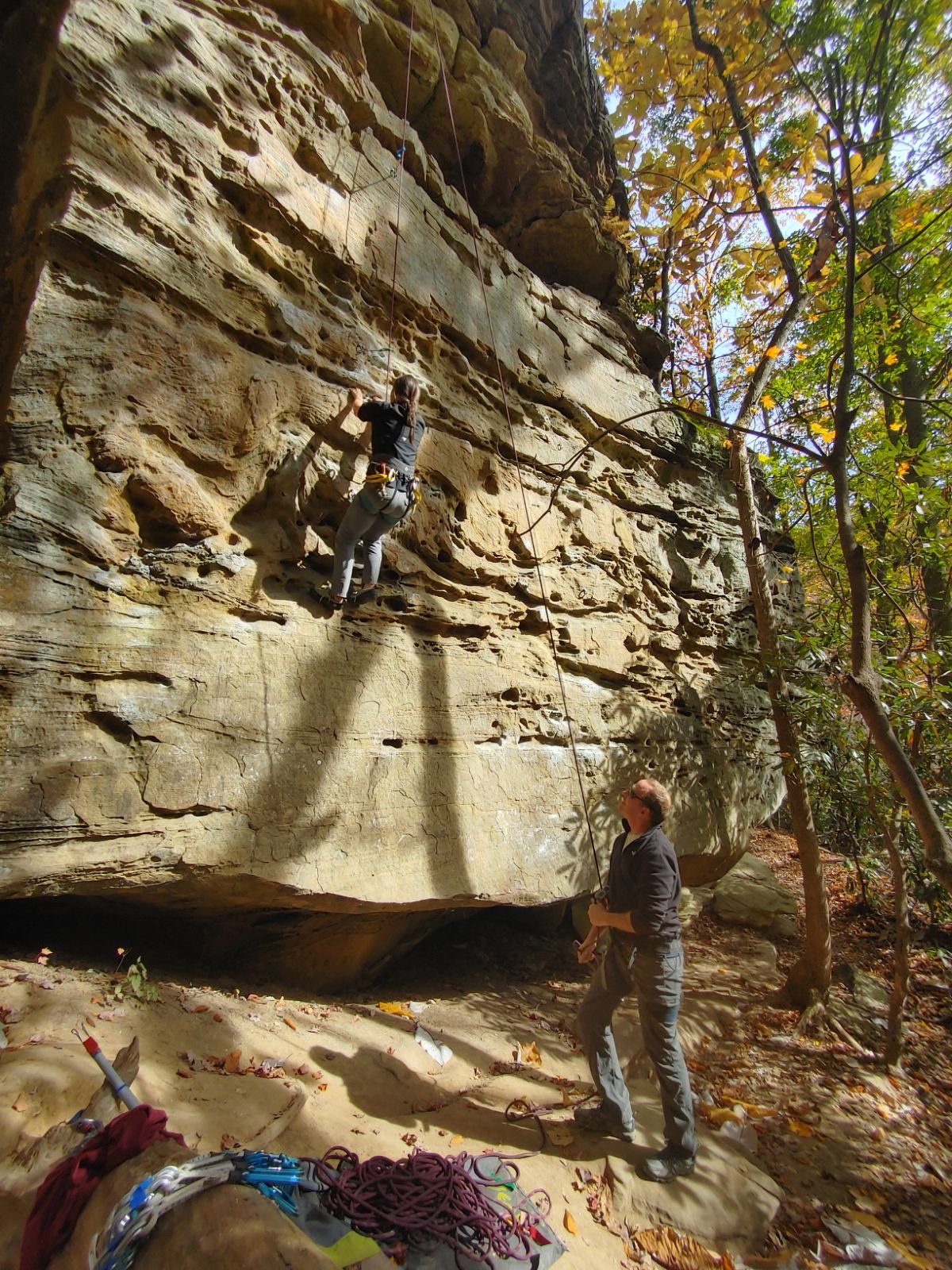
Red River Gorge has the highest concentration of natural arches east of the Rocky Mountains and some of the best sport climbing in North America. Muir Valley is the crown jewel. The preserve has more than 30 climbing walls covering everything from beginner top-rope routes to technical sport climbs that draw professionals from across the country.

Muir Valley is owned and operated by Friends of Muir Valley, a nonprofit that maintains access and stewardship of the land. There is no admission charge to climb, but there is a $15 per vehicle daily parking fee that funds the upkeep. Membership and volunteering options are available if you want to earn an annual parking pass and go deeper into the community.

If you have never climbed before, this is a legitimately great first destination. The local climbing community is welcoming, and guided instruction is available through outfitters in the area. If you are an experienced climber, you already know what Muir Valley is, and you are probably already packing your shoes.

3. Float the Red River

The lower stretches of the Red River are calm enough for tubing and family-friendly paddling, and they move through some of the most gorgeous forest scenery in Kentucky. This is the unhurried version of the Gorge: no elevation gain, no scrambling, just water and trees and the occasional heron watching you drift by.

It is an easy half-day activity that pairs well with a big lunch and an early evening in the hot tub. Check with local outfitters for current conditions and rental options before heading out.

4. Spend an Evening at Gorge Underground (After Dark)

If you do the kayak tour during the day, consider going back at night. The neon-lit options hit differently after dark, and the mine temperature stays constant year-round, which means it is a relief on a hot August evening and a warmth on a cold October one. It is one of those experiences that photographs well but feels even better in person.

5. Eat Your Way Through the Gorge

The food scene around Red River Gorge is better than it has any right to be, and it is one of the most underrated parts of a trip here. A few places worth knowing about:

Sky Bridge Station is a restaurant, tap house, and gear shop all in one building, which sounds chaotic and is actually perfect. Gourmet hot dogs, quesadillas, and roughly a dozen Kentucky microbrews on tap. It hits a specific note of post-hike satisfaction that is hard to replicate.

Thatcher Barbecue Company in Slade opened in 2021 and has quickly become a local favorite for downhome barbecue done right. The kind of place where you order more than you planned to.

Red Point BBQ is another genuinely great barbecue option with a loyal local following. When two BBQ spots are both worth recommending in the same small area, that tells you something about the caliber of the food culture here.

145 Roadhouse in Campton handles the bourbon burgers, catfish, steaks, smoked meats, and fried pickles side of things, plus live music on weekends. It is the kind of place that rewards a spontaneous weeknight visit.

La Cabana brings authentic Mexican to the Gorge area, tacos and burritos and margaritas that earn their reputation. And if you need coffee before any of the above, Daniel Boone Coffee Shop in Slade on Natural Bridge Road is the right first stop of the day.

Many of these spots keep seasonal hours, so check with them directly before building your day around a reservation.

6. Browse Mushroom Grove Shopping Village

Mushroom Grove is a shopping village with roughly 14 stores along an elevated boardwalk, and it earns a stop even if shopping is not usually your thing. The mix of boutique outdoor outfitters, handmade gifts, gem mining for kids, sweets, coffee, and cookies makes it the kind of place where you go to find one thing and leave with four.

Raven’s Crest Outfitters is worth the visit on its own for outdoor clothing, gifts, and a genuinely fun Sasquatch-themed section that is exactly as delightful as it sounds. Gorge Outdoor Collective carries gear, hats, stickers, and the kind of small souvenirs that are actually worth owning.

7. Ride the Sky Lift at Natural Bridge

Natural Bridge State Resort Park is famous for its 78-foot sandstone arch, and most people hike the Original Trail to reach it. But the park also runs a seasonal sky lift from roughly April through November that covers the climb in about 11 minutes. It is a legitimate option for anyone traveling with young kids, older family members, or anyone who wants the view without the exertion.

The arch itself is the payoff. Standing on top of a natural sandstone bridge that spans 78 feet and rises 65 feet above the gorge floor does not get less impressive no matter how many times you do it. If you have not been, this is not optional.

8. Catch Live Music

Red River Rockhouse hosts live music alongside its American fare menu, making it a dinner-and-show option that requires no planning beyond showing up. Hop’s beer garden in the Campton area does the same, with a lively outdoor atmosphere that fits the Gorge vibe perfectly. 145 Roadhouse brings live music to its weekends as well.

The region has a deep live music culture that runs well into fall, and stumbling into a set on a Saturday night after a day on the trails is one of those spontaneous trip highlights that cannot be planned, only stumbled into.

9. Stargazing From the Canopy

This one does not require any driving. The Gorge area has low enough light pollution that the night sky does something on clear nights that most people in cities have genuinely never seen. The Milky Way. Actual stars in number, not in theory.

Picture yourself in the hot tub at Canopy 7, water at the right temperature, and the tree canopy opened just enough overhead to watch the sky. The woodpeckers have gone quiet. Your phone is inside because you did not reach for it. That specific moment is why people come back here year after year and have a hard time explaining it to friends who have not been.

If you want to stay at the cabins that have that view waiting for you, you can browse and book Canopy 7 and Canopy 9 directly at Vacation Alchemist. No third-party platforms, no middleman.

10. Visit an Arch You Have Never Heard Of

Everyone knows Natural Bridge. Fewer people know about Whittleton Arch, which sits at the end of a roughly 2.6-mile round-trip trail that follows a creek and stays mostly gentle the whole way. It is quieter than the marquee arches, the reward is substantial, and you are unlikely to share it with a crowd.

Rock Bridge is another one worth knowing. It is the only arch in the Gorge with a stream running beneath it, which makes for a photograph that looks like it was staged. The loop that passes Creation Falls on the way is only about 1.5 miles. Both of these arches are legitimately worth a half-morning, and both tend to get overlooked in favor of the famous names.

11. Grab Something Sweet

Sweet Art by Stephanie handles the bakery and dessert side of the Gorge food scene, and Red River Gorge General Store in Slade has fudge and ice cream alongside the camping essentials. Neither of these requires justification. You are on vacation.

12. Do Absolutely Nothing, Intentionally

This is the one that surprises people most. The Gorge has a pace to it. The mornings come in slow, with fog still sitting in the valley and light filtering through the canopy in a way that makes it genuinely difficult to rush. Coffee on the deck. The sound of the forest waking up. No agenda.

It turns out that doing nothing in the right place is actually doing something. The couples who come here to reconnect figure this out quickly. So do the families who spend a morning watching the light move across the trees instead of hitting the next trail. The Gorge earns the pace. Give it the morning.

Frequently Asked Questions

What is there to do in Red River Gorge besides hiking?

Red River Gorge offers world-class sport climbing at Muir Valley, underground kayak tours through a flooded limestone mine at Gorge Underground, tubing and paddling on the Red River, a sky lift at Natural Bridge State Resort Park, live music at several local venues, and a surprisingly deep restaurant scene spanning BBQ, Mexican, craft beer tap houses, and more. The area also has boutique shopping at Mushroom Grove and exceptional stargazing due to low light pollution.

Is Red River Gorge good for non-hikers?

Yes. The sky lift at Natural Bridge State Resort Park gets non-hikers to one of the most iconic views in Kentucky without any trail effort. Gorge Underground’s kayak tours, the Red River for floating, Mushroom Grove shopping, and the local food and music scene all give non-hikers a full, rewarding trip without a single elevation change required.

What is Gorge Underground?

Gorge Underground offers guided kayak, paddleboard, and boat tours through a flooded abandoned limestone mine in Slade, Kentucky. Glass-bottom and neon-lit kayak options are available. Tours run roughly one hour and reservations are strongly recommended during busy season.

Is Muir Valley free to visit?

Muir Valley is free to climb. There is a $15 per vehicle daily parking fee that funds maintenance of the preserve, which is owned and operated by Friends of Muir Valley, a nonprofit organization. There is no admission charge beyond the parking fee.

When is the best time to visit Red River Gorge?

Red River Gorge is genuinely worth visiting in every season. Fall (late September through October) is peak season for foliage and arguably the most visually spectacular time of year. Spring brings wildflowers and the reopening of climbing season. Summer is ideal for swimming holes, paddling, and stargazing. Winter is quieter, more intimate, and pairs especially well with a hot tub and a fire pit, with no crowds on the trails.