
Red River Gorge Wildlife: The Neighbors You Did Not Know You Were Getting
You book a cabin in the trees for the hot tub, the views, the chance to stop checking your phone every four minutes. That part you planned for. What you did not plan for is the woodpecker drilling a dead oak at 7am, or the white-tailed deer standing in the clearing like she owns the place, or the distinct, low feeling in your chest when you realize something large and black is moving at the tree line.
Red River Gorge wildlife is not a sideshow. It is part of the experience, woven into every trail, every morning on the deck, every quiet hour by the fire pit. This is a genuine Appalachian forest inside the Daniel Boone National Forest, and it is home to creatures that were here long before the first climbing route was bolted and will be here long after.
Here is who lives in these woods, what to expect, and how to share the forest responsibly with all of them.
Shady: The Resident Black Bear (and the Star of the Show)
Red River Gorge black bear sightings are not guaranteed, not common, and absolutely unforgettable when they happen. Shady is the bear who turns up occasionally near the Canopy 7 and Canopy 9 area, moving through on his own schedule, curious and elusive in equal measure.
He has earned his name. He is not aggressive. He is not looking for trouble. He is doing what black bears do in the eastern Kentucky hills, which is mostly wander, forage, and appear at the exact moment you least expect him, just to remind you where you are.
A few things worth knowing about black bears in the Gorge:
- If you spot one, enjoy it from a distance. Do not approach, do not follow, do not try to get a closer photo.
- Never leave food out, on decks, by fire pits, or anywhere outside. A bear that associates humans with food is a bear in trouble.
- Black bears in this region are not typically dangerous to people who give them space. Respect the space.
- Sightings happen. They are not predictable. Think of it as a bonus, not a promise.
If you do see Shady moving through the woods from the safety of a cabin deck or a trail overlook, that is a memory that stays with you. Guests who catch a glimpse tend to text their friends immediately and forget, for a moment, that they were supposed to be unplugging.
Fiona: The White-Tailed Deer Who Visits Like She Was Invited
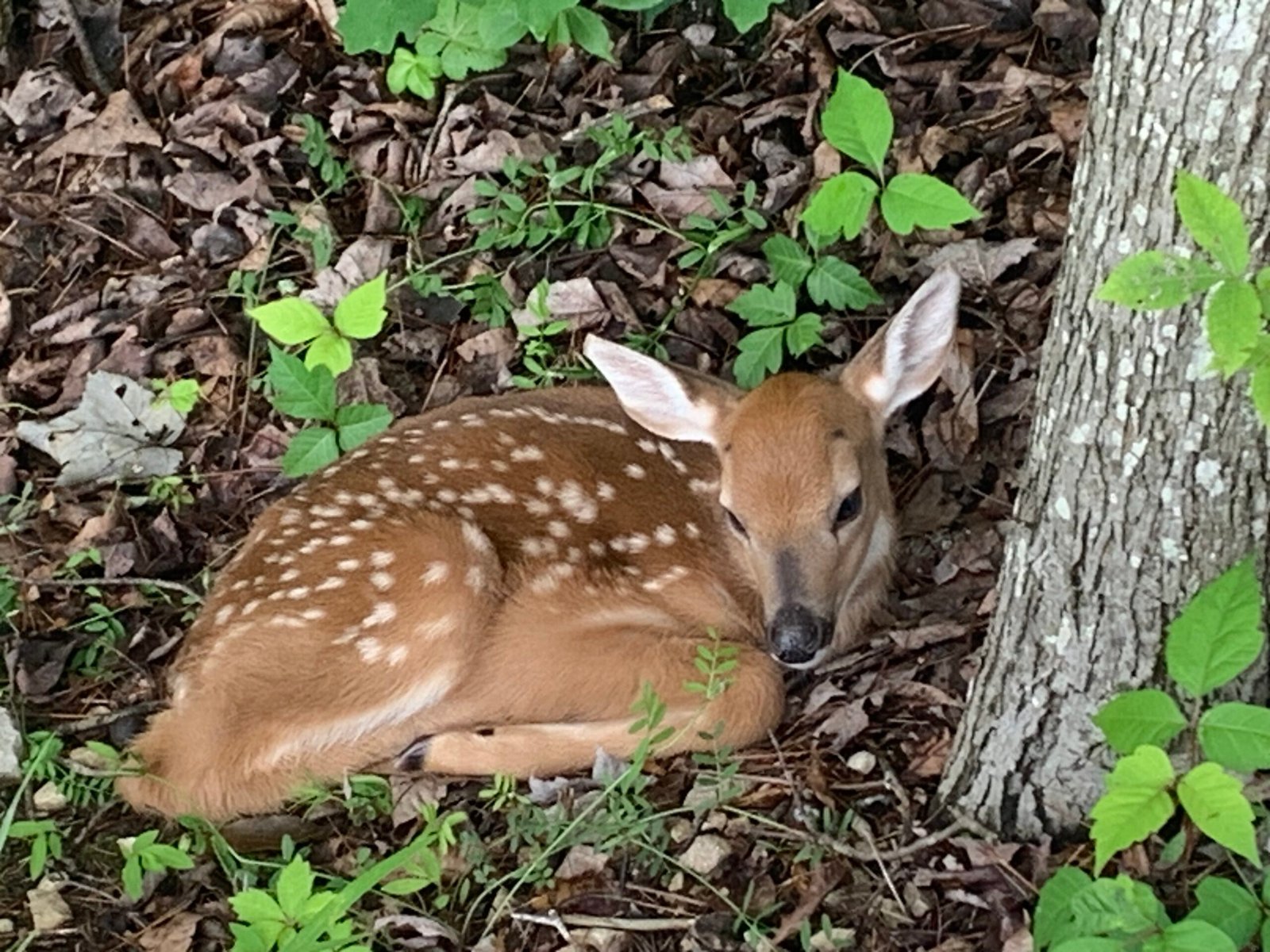
White-tailed deer are common throughout the Red River Gorge, but Fiona is the one with a name and a reputation for showing up at Canopy 9 with the kind of calm that suggests she has been doing this longer than you have been visiting.
Deer in the Gorge are most active at dawn and dusk. If you are the type to sit with coffee on the deck before the rest of the world wakes up, you have a reasonable shot at seeing one moving through the understory. In late spring and early summer, fawns appear with their spotted coats. In fall, the forest opens up a little as the leaves thin, and deer are easier to spot in the clearings.
White-tailed deer are gentle, observant, and very good at standing completely still until you notice them and then bounding off into the trees before you can reach for your phone.
Baxter: The Bunny Around the Cabins
Not every wildlife encounter requires binoculars or a long hike. Sometimes it is just a rabbit in the grass near the fire pit, going about his morning business with complete indifference to your presence.
Baxter is the local rabbit in the cabin area, small enough to be easy to miss and quiet enough that he is often spotted by guests who are simply sitting still and paying attention. Children, in particular, tend to find Baxter immediately. It is a gift specific to places where the pace slows down enough for you to notice small things again.
Who Else Lives in These Woods
Beyond the named regulars, the Red River Gorge forest holds a full cast of Appalachian wildlife. Here is a quick field guide to who shares the trails with you.
Birds Worth Knowing
The barred owl is the voice of the Gorge after dark. Its call, a rolling series of hoots that sounds unmistakably like “who cooks for you, who cooks for you-all,” carries a long way through quiet forest. You will likely hear one before you ever see one. Great horned owls are here too, deeper and more authoritative, audible on still nights from the cabin decks.
During the day, pileated woodpeckers work the dead trees with a sound like someone knocking on a door from inside the forest. They are large, striking birds with a red crest, and when one lands on a nearby trunk, it is hard to look away. Songbirds fill in the rest of the soundtrack from early spring through fall, with warblers passing through during migration in a way that makes birders plan entire trips around the timing.
The Quieter Neighbors
Wild turkey are common in the early mornings and tend to move in groups through the understory. Raccoons and squirrels are everywhere and entirely unbothered by human presence. Chipmunks work the forest floor near the rock outcroppings along most of the major trails.
The bobcat is here, almost certainly, but it is genuinely elusive. Most longtime locals have never seen one. If you do, consider it the rarest stamp in your Gorge passport.
On the Trails: Smaller Wonders
Slow down on any creek-side trail in late summer or fall and you have a reasonable chance of spotting a red-spotted newt on the forest floor or a box turtle making its deliberate way across the path. Neither will rush on your account.
The red-spotted newt is one of those creatures that stops people mid-stride. Bright orange-red with small dots along its sides, it looks like something out of an illustrated field guide. It is real, it is harmless, and it is exactly the kind of specific moment that makes a walk in the Gorge feel different from anywhere else.
When Are You Most Likely to See Wildlife at Red River Gorge?
The honest answer: the quieter you are, the earlier you rise, and the more time you spend sitting still rather than moving fast, the better your chances.
Dawn and dusk are the high-activity windows for most mammals. Deer, turkey, and even the occasional bear are most active when the light is low and the trails are not yet busy. If you are at the cabin at sunrise with a coffee and no agenda, you are already in the best possible position.
Fall is a particularly good season. As the leaves turn and the canopy opens, visibility into the forest improves. Animals are more active preparing for winter. The Gorge is quieter on weekday mornings than weekend afternoons. All of these things work in your favor if wildlife is something you genuinely care about.
Spring brings fawns and migrating songbirds. Summer brings the newts and box turtles along creek trails. Winter, when the forest is bare and silent, is when the owls are easiest to hear and the tracks in any light snow tell you exactly who passed through the night before.
How to Be a Respectful Guest in Their Forest
A few simple things make a real difference, both for the animals and for the guests who come after you.
- Store all food and trash properly. Never leave anything outside overnight, whether that is a bag of chips on the deck railing or a cooler by the fire pit. This is especially important with a bear in the neighborhood.
- Observe, do not intervene. A deer that looks tired is not lost. A bird that is on the ground is probably fine. Let them be.
- Keep the noise level reasonable, particularly in the early morning hours. The wildlife does not adjust to your schedule, but you can adjust to theirs.
- Photograph freely, but from a respectful distance. A good phone camera with a little patience beats crowding an animal every time.
The Cabins Are Part of the Habitat
Canopy 7 and Canopy 9 are treetop cabins in a real Appalachian forest, which means the wildlife is not a feature, it is just the neighborhood. Shady has been spotted near Canopy 7. Fiona visits Canopy 9. Baxter is somewhere in the grass. The barred owls call from the dark every night whether you are listening or not.
That is the thing about staying somewhere like this. You are not watching nature through a window from a distance. You are inside it. The deck is canopy level. The hot tub looks up into the branches. When you sit still long enough, the forest stops treating you like an interruption and just goes about its business around you.
That is a specific feeling. It is not easy to find. And it is one of the better reasons to plan a stay at Vacation Alchemist before the season changes and the trees do something spectacular around you.
Frequently Asked Questions About Red River Gorge Wildlife
Are there black bears at Red River Gorge?
Yes. Black bears are part of the native Appalachian wildlife in and around the Red River Gorge area. Sightings are not common or guaranteed, but they do happen. The bears in this region are not typically aggressive toward humans who give them appropriate space. Store food properly and enjoy any sighting from a distance.
Is it safe to hike at Red River Gorge with bears in the area?
Yes, hiking at Red River Gorge is safe. Black bears in eastern Kentucky generally avoid people. Standard bear-country practices apply: do not leave food out, do not approach a bear if you see one, and make enough noise on the trail that you do not surprise one at close range. Thousands of hikers and climbers visit the Gorge every year without incident.
What wildlife is most commonly seen at Red River Gorge?
White-tailed deer, wild turkey, squirrels, chipmunks, raccoons, and a wide variety of birds (including barred owls, pileated woodpeckers, and songbirds during migration) are the most reliably spotted animals. Red-spotted newts and box turtles are common finds along creek-side trails in warmer months.
What is the best time of day to see wildlife in the Gorge?
Dawn and dusk are the high-activity periods for most mammals. Spending time on a cabin deck at sunrise or sitting quietly near a trailhead in the early morning gives you the best odds of spotting deer, turkey, and other animals before the trails get busy.
Are there any dangerous animals at Red River Gorge?
The Gorge is home to copperhead snakes and, less commonly, timber rattlesnakes. Both are venomous and both will avoid you if given the chance. Watch where you step on rocky trails, do not reach into crevices, and wear sturdy footwear. Black bears are present but not dangerous to respectful visitors. The forest is safe for hikers who pay attention and give wildlife appropriate space.