
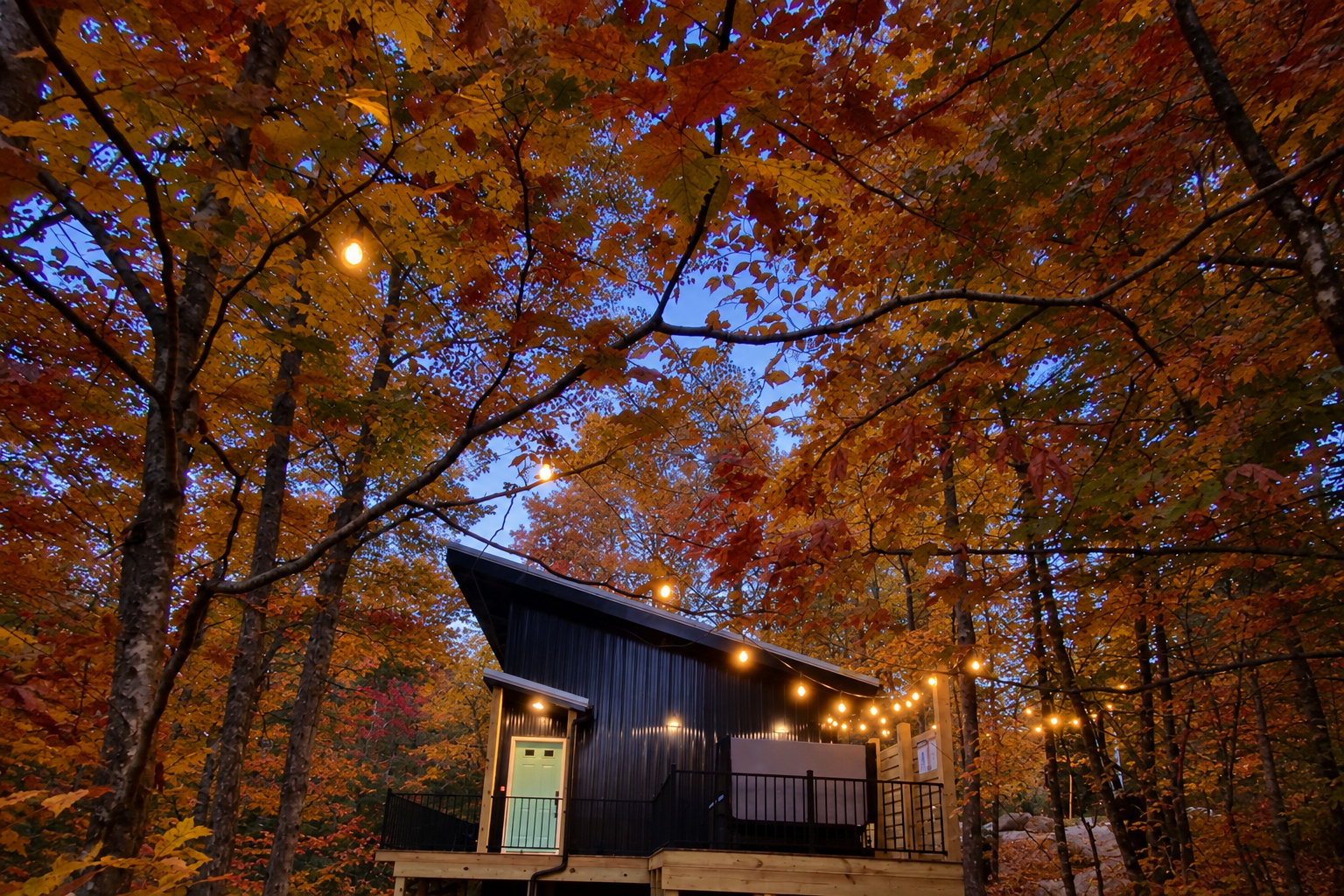
Red River Gorge rewards the prepared traveler. Pack right and you are free to chase a waterfall, linger in a hot tub until midnight, and wake up early enough to catch the fog sitting in the canyon. Pack wrong and you spend your first morning driving back to Lexington for hiking shoes. This list exists so that does not happen to you.
Whether you are staying in a treetop cabin perched above the forest canopy or setting up a base camp to hit as many trails as possible, the Gorge has a specific set of needs. We have distilled them here, organized so you can pack in order and check off as you go. Save this page before you leave the cell service zone.
What to Pack for Red River Gorge: The Complete Cabin Packing List
Footwear (This One Matters More Than Anything Else)
The trails in the Daniel Boone National Forest are sandstone, root-covered, creek-crossed, and genuinely technical in places. A trail runner or low hiking boot with real grip is not optional. Flip flops belong on the deck, not on the path to Gray’s Arch.
- Hiking boots or grippy trail runners (broken in, not new out of the box)
- Water shoes or old sneakers for creek crossings and river access
- Sandals or slide-ons for around the cabin
- Wool or moisture-wicking socks, at least two pairs per hiking day
If you plan to walk behind a waterfall like Copperas Creek Falls or scramble through any creek-side route, assume your feet are getting wet. Pack accordingly.
Clothing: Layer Like You Mean It
The Gorge sits in the hills of eastern Kentucky, and the temperature swings between trailhead and ridgeline, between midday sun and after-dark hot tub, can be significant. Even in summer, nights drop fast once the sun leaves the canopy. In late fall and winter, a 20-degree swing between afternoon and midnight is not unusual.
- Moisture-wicking base layers (one per hiking day)
- A mid-layer fleece or lightweight down jacket
- A wind and rain shell (the Gorge does not wait for a weather window to change its mind)
- A warm hat and gloves if you are visiting October through March
- Comfortable, non-cotton layers for evenings at the fire pit
- At least one outfit you are happy to get muddy
- Swimsuit (the hot tub is private, it is heated, and you will regret not having one)
Cotton is the enemy on trail. It holds moisture and makes cold nights miserable. Leave the cotton hoodie for the fire pit and pack synthetic or wool for anything involving a hike.
Day Pack and Trail Essentials
Even short hikes in the Gorge earn respect. A trail labeled moderate can include real elevation, exposed ridgelines, and sandstone scrambles that slow you down. The Ten Essentials apply here just as they would in any serious backcountry.
- A daypack in the 15 to 25 liter range (enough for water, snacks, and layers)
- Water: at least 2 liters per person for a full hiking day, more in summer
- Water filter or purification tablets (if you plan longer routes near streams)
- High-calorie snacks (trail mix, bars, real food)
- Paper map or downloaded offline map of the trail system (AllTrails offline mode is your friend; cell signal is not reliable)
- Headlamp and spare batteries
- Basic first aid kit with blister pads, ibuprofen, and an ACE bandage
- Trekking poles (optional but appreciated on routes like Auxier Ridge or Indian Staircase)
- Sunscreen and insect repellent, spring through fall
A note on Indian Staircase: it involves real, exposed sandstone scrambling that can be genuinely dangerous for unprepared hikers. If it is on your list, pack accordingly and do not go alone unless you have scrambling experience. For families or first-timers, Rock Bridge Loop or Whittleton Arch are excellent and reward with far less consequence.
Hot Tub and Night Sky Kit
One of the quieter pleasures of staying in a treetop cabin at the Gorge is the private hot tub with nothing overhead but tree canopy and, on clear nights, an embarrassing number of stars. Optimize for it.
- Swimsuit (mentioned in clothing, worth mentioning twice)
- A lightweight robe or oversized towel for the walk from deck to door on cold nights
- A good thermos or insulated mug (coffee at sunrise on the deck is not negotiable)
- A red-light headlamp if you are serious about stargazing (preserves night vision)
- A star map app downloaded offline
- A Bluetooth speaker, low-volume, for the fire pit playlist
Tech and Connectivity
Cell service in the Gorge is inconsistent at best. That is partly the point. But it means preparation matters more than usual.
- Portable power bank, fully charged before you leave home
- Camera or phone charged the night before every hike (the light in the Gorge earns it)
- Offline maps downloaded before you lose signal (AllTrails, Google Maps, Gaia GPS)
- Kindle or a real book for the cabin evenings
- Your hiking playlist saved for offline play
If you need to work remotely for part of the trip, check with your cabin host about the wifi situation before you book. Working from a deck overlooking the forest canopy is a genuinely productive experience, but only if the signal cooperates.
Food, Drinks, and Cabin Supplies
The Gorge has a solid lineup of restaurants. Thatcher Barbecue Company in Slade, Sky Bridge Station with its Kentucky microbrews, Red River Rockhouse, La Cabana for a solid taco situation, and 145 Roadhouse in Campton for a weekend-worthy dinner. You will not go hungry. But the drive from the trailhead to anywhere with groceries takes time, and after a full day on the trail, the last thing you want is a 20-minute drive before you can eat.
- Enough breakfast supplies for every morning you plan to eat at the cabin (eggs, oats, coffee, real creamer)
- Packed lunches for trail days so you are not driving back midday
- Snacks for the cabin: cheese, crackers, fruit, things that do not require cooking
- Your preferred coffee setup (a French press and good beans elevate a foggy morning significantly)
- A bottle of wine or a six-pack of something local for the fire pit
- A cooler if you are packing for multiple days of trail lunches
- Reusable water bottles, one per person plus one for the car
- A small cutting board and your favorite knife (cabin kitchens have the basics, but your gear is always sharper)
If your cabin host is worth their salt, you will find the place stocked with a few welcome surprises when you arrive. The best hosts know what a tired hiker actually needs. Skip and Liz at Vacation Alchemist have a habit of thinking about that before you even ask, which is one of the reasons booking direct through vacationalchemist.com means you get a different experience than a faceless platform booking. More on that at the end.
Climbing-Specific Gear (If You Are Here for the Rock)
Red River Gorge is one of the premier sport climbing destinations in the country. If climbing is on the agenda, you likely already know what you need. A few Gorge-specific notes:
- Muir Valley is free to climb but charges a $15 per vehicle daily parking fee; the fee funds the nonprofit Friends of Muir Valley, which maintains the preserve. A membership or volunteer day can earn you an annual pass.
- The rock is sandstone, which can be polished on popular routes. Plan for grades that feel harder than they are on limestone.
- A guidebook to the Gorge is worth having in paper form. Cell signal is unreliable at the crags.
- Tick brushes, your own anchors, and a willingness to leave nothing behind. The Gorge climbing community keeps this place clean and open. Do your part.
What You Can Leave at Home
A few things people routinely overpack for a Gorge cabin trip:
- Heavy camp cooking gear (the cabin has a full kitchen)
- A tent (you have a treehouse)
- Your entire skincare routine (bring the basics; the forest will simplify you)
- Work stress (the signal drops before you hit the trailhead)
When to Go and What Changes by Season
The Gorge shifts dramatically with the seasons, and your packing list should shift with it.
Spring brings wildflowers, full creeks, and muddy trails that require real grip. Fall brings the foliage, cooler air, and the best light the Gorge offers all year. Summer is hot on the exposed ridgelines and crowded on weekends, but the swimming holes and evening hot tub are unbeatable. Winter is the secret season: quiet trails, potential snow views from the deck, and a hot tub that hits different when the air is 28 degrees.
Whatever the season, the layering principle holds. Mornings in the Gorge are cooler than the forecast suggests. Nights are always cooler than you expect. Pack one more warm layer than you think you need.
The Case for Booking Your Cabin Direct
When you reserve a cabin through Airbnb or VRBO, the platform adds its own service fees on top of the nightly rate and puts a layer of automation between you and the people who actually know the place. When you book through vacationalchemist.com, you skip those fees and book with the hosts directly. That means the people who know which trail is muddy this week, which barbecue spot opened a new patio, and what to stock the cabin with for your specific trip are the same people you are talking to before you even arrive. That is not a small thing. Start your Vacation Alchemist booking here and see what the difference feels like.
Frequently Asked Questions
Is there cell service at Red River Gorge cabins?
Cell service in the Red River Gorge area is limited and inconsistent, especially on the trails and in the canyon. Most cabins have wifi, but you should download offline maps and any media before you arrive. Think of it as a feature, not a bug.
Do I need to bring towels to a Red River Gorge cabin?
Most vacation rental cabins in the Gorge provide standard bath towels, but it is worth confirming with your specific host. If you plan to use the hot tub regularly, bringing an extra towel or a lightweight robe for the walk back inside on cold nights is a smart move regardless.
What shoes should I wear hiking in Red River Gorge?
Trail runners or low to mid hiking boots with solid grip and a grippy outsole are the right call for most Gorge trails. The terrain is sandstone, rooty, and often wet near creek crossings. Avoid new, unbroken shoes and avoid anything without real traction. For scramble routes like Indian Staircase, a stiffer sole and ankle support matter more.
Should I bring food or eat out in Red River Gorge?
Both. The Gorge has a solid restaurant scene including Thatcher Barbecue Company, Sky Bridge Station, La Cabana, Red River Rockhouse, and 145 Roadhouse in Campton, among others. That said, packing your own trail lunches and cabin breakfasts saves time and keeps you flexible. Many spots have seasonal hours, so check before you plan your whole itinerary around a dinner reservation.
Is Red River Gorge good in November and December?
Yes. Late fall and early winter are genuinely good times to visit the Gorge. The crowds thin, the trails are quiet, and a private hot tub with a fire pit in cold air is one of the more civilized ways to spend a winter evening. Bring real layers, a good hat, and low expectations for warm afternoon light. The payoff is a different kind of beauty than summer, and it is entirely worth it.